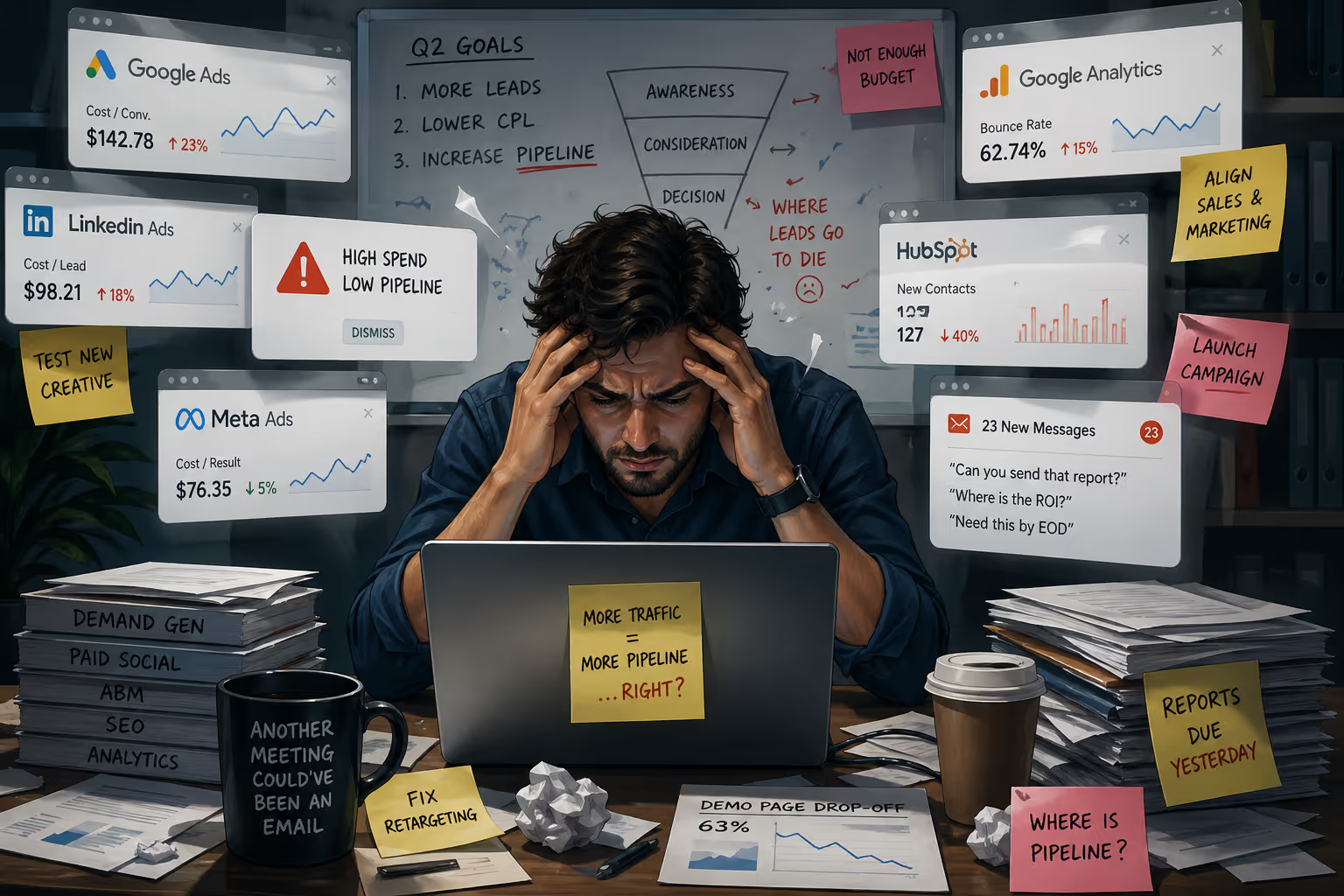
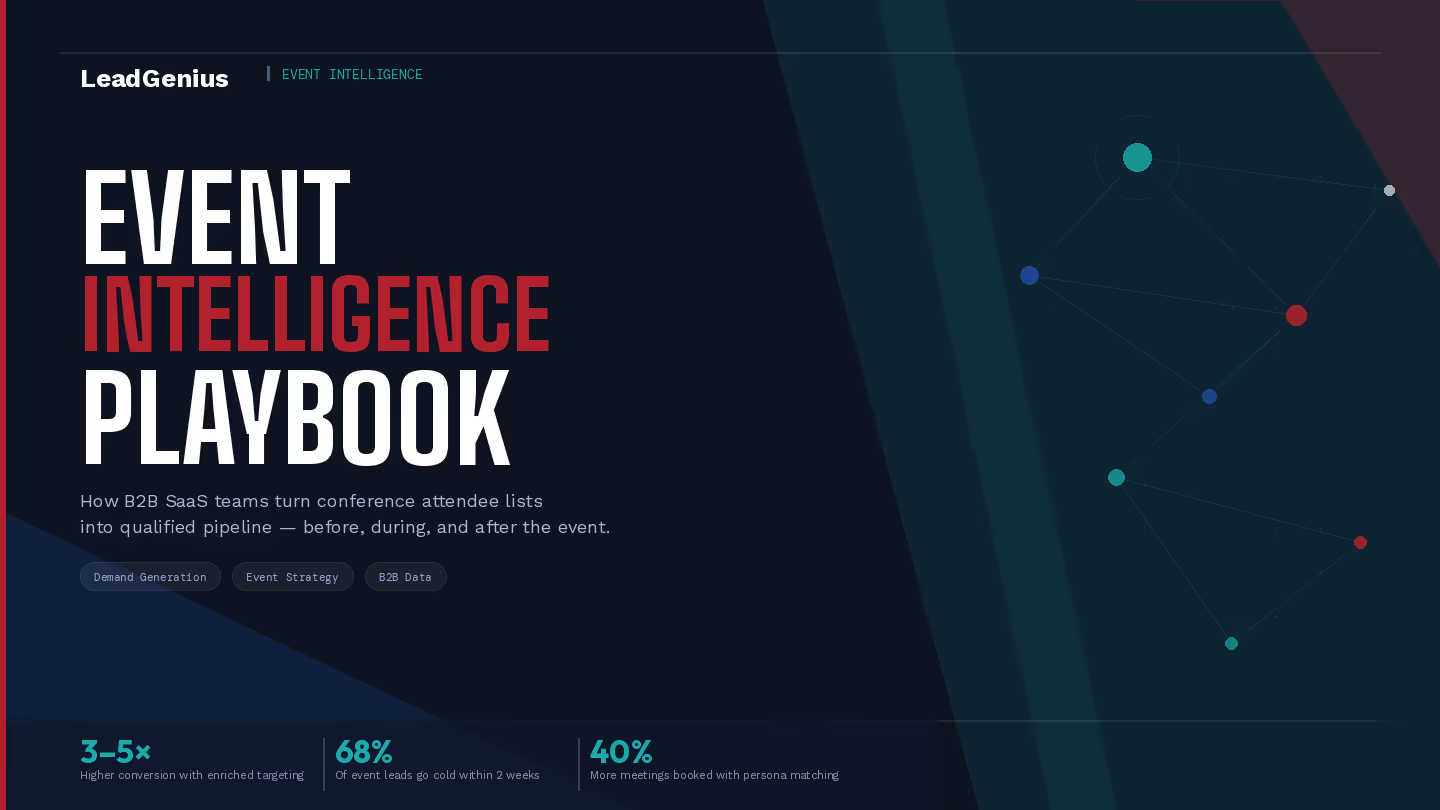
Most companies treat conferences as a brand play and hope the badge scans turn into something. The ones winning on ROI treat them as a data problem — and solve it before the first keynote goes live.
Live events are one of the highest-CAC, highest-potential channels in B2B marketing. Dreamforce alone draws 40,000+ attendees. Google Cloud Summits, SaaStr Annual, INBOUND, and dozens of vertical-specific conferences pull concentrated rooms of exactly the buyers you've been chasing in digital. But most teams leave those rooms without a systematic plan to convert the contact surface into qualified pipeline.
The gap isn't effort. It's data infrastructure and sequencing. Teams that consistently generate ROI from events operate a repeatable pre- and post-conference intelligence motion — one built on enriched lists, contact-level research, targeted campaigns, and sequenced follow-up that hits before attention fades.
This piece breaks down that motion: what it looks like, how to execute it, and where data and audience intelligence does the heavy lifting so your team can focus on the conversations that close.
Before the Event: Build the Intelligence Layer
The window between event registration and event day is the most underutilized stretch in B2B go-to-market. Your competitors are using it to finalize booth logistics. Your team should be using it to build a contact intelligence dossier on every account worth talking to.
Start With Last Year's List
If you attended the conference before, you have a first-party asset most teams ignore: the prior year attendee list. These contacts attended once — they're likely to attend again. They were qualified enough to show up. And they're almost certainly stale in your CRM.
Enrichment on this list typically reveals significant data decay: titles change, companies shift, decision-makers move on. Running a historical list through a structured enrichment process before registration opens gives you a warm, accurate foundation to build from — segmented by role, seniority, account size, and tech stack.
- Enrich and re-segment the prior year list Run enrichment on job title, company, seniority, and technographic signals. Identify who's still relevant, who's moved, and which accounts have grown into better-fit buyers.
- Identify multi-thread opportunities Most event lists are one contact per account. Build out buying committees — who else at that company should you be reaching? CFOs, ops leads, IT stakeholders — depending on your product.
- Flag current customers and open opportunities Separate your list into net-new prospects, existing customers to expand, and open pipeline you can accelerate with a face-to-face conversation.
Research This Year's Registered Attendees
Most conferences publish speaker lists, sponsor rosters, and partial attendee data well before the event. Some sell attendee lists directly. Others surface intent data through registration flows. Regardless of source, the research motion is the same: identify accounts attending, map contacts to buying roles, and build a prioritized target list before you land on-site.
LeadGenius builds bespoke attendee contact sets — including direct emails, LinkedIn profiles, mobile when available, and technographic signals — for specific conferences, giving your team an account-by-account intelligence layer that off-the-shelf databases can't replicate at this precision.
For large-scale events like Dreamforce, this means segmenting by Salesforce product alignment, company revenue band, and current tech stack to surface the 200 accounts worth prioritizing out of 40,000 attendees. For mid-market focused events, it means identifying the right person at each attending company — not just any title with "marketing" in it.
Stand Up Pre-Conference Ad Campaigns
Once you have an enriched target list, activate it across paid channels before the event to warm the room. The goal isn't conversion at this stage — it's recognition. You want your brand and value proposition familiar before your rep walks up and introduces themselves.
- Upload your enriched attendee list as a custom audience across LinkedIn, Meta, and programmatic channels
- Run awareness-stage creative 3–4 weeks out, shifting to consideration content in the final week
- Use event-specific messaging that acknowledges the context ("See you at Dreamforce" style hooks outperform generic ads in this window)
- Suppress existing customers and current open pipeline from net-new messaging — personalize their experience separately
- Coordinate ad sequencing with SDR outbound so contacts are seeing both channels simultaneously
The reps that book the most meetings at events aren't the ones working hardest on the floor. They're the ones whose prospects already knew who they were before they walked in.
Pre-Event Outbound Sequences
Pair your ad activation with a structured outbound sequence targeting high-priority accounts 3–4 weeks before the event. The sequence goal is simple: book the meeting before the conference, not during the chaos of it.
A high-performing pre-event sequence typically runs 4–6 touches across email and LinkedIn, references the event directly, and leads with a specific value proposition tied to a conversation worth having — not a generic "let's connect at the show" ask. Include a specific meeting booking link calibrated to your on-site availability.
Touch 1 (T-21 days): Personalized cold email referencing the event and a relevant insight about their business.
Touch 2 (T-17 days): LinkedIn connection request with a short contextual note.
Touch 3 (T-12 days): Follow-up email with a relevant proof point or customer story.
Touch 4 (T-7 days): Direct ask — specific meeting time or booth visit invitation.
Touch 5 (T-2 days): Final confirmation ping for booked meetings; last-chance outreach for non-responders.
Salesforce's Pre-Conference Intelligence Motion
LeadGenius has supported Salesforce's event data operations around Dreamforce, helping build enriched attendee contact sets that go beyond what the conference registration surface provides — identifying buying committee members, decision-maker contacts, and technographic signals across target accounts attending the event.
Running a pre-event enrichment and contact build allows their teams to prioritize the right accounts for on-site meeting time, route contacts to the appropriate product team, and activate coordinated ad and outbound sequences that warm target accounts well before the show floor opens.
After the Event: Convert Conversations Into Pipeline
The conference ends. Your team flies home with a stack of business cards, a spreadsheet of badge scans, and a lot of optimism. Then Monday hits. The window to convert those warm conversations into pipeline is roughly 72 hours before the event fades from memory on both sides. Most teams miss it entirely.
Post-conference execution requires the same data discipline as the pre-event motion — enriching what you collected, segmenting by conversation quality, and activating sequenced follow-up before your competitors do.
Enrich What You Collected On-Site
Badge scans and business cards typically yield name, title, and company. That's not enough to personalize a meaningful follow-up. Before your sequences go live, run your collected contacts through enrichment to layer in direct email, mobile, LinkedIn, tech stack, and account-level firmographics.
This step also catches data quality issues common in event collection: misspelled names, outdated titles, duplicate entries from multiple touchpoints. Clean, enriched data going into your CRM means your sequences perform — and your pipeline data is defensible when the CRO asks for ROI numbers.
Segment by Conversation Quality
Not all event contacts are equal. A rep who had a 30-minute product demo conversation should not be sending the same follow-up as a rep who exchanged cards at a cocktail reception. Build a tiered segmentation into your post-event workflow:
- Hot — Active Discovery Conversations Contacts where a specific next step was agreed upon. These go into a direct AE sequence with a calendar booking link within 24 hours.
- Warm — Engaged but No Next Step Contacts who showed genuine interest but the conversation didn't land a commitment. Nurture sequence with relevant content, case studies, and a soft CTA to book a call.
- Cold — Passive Badge Scans or Card Exchanges Lower-context contacts. Add to a longer-term nurture track with educational content and retargeting via paid channels.
Post-Event Email Sequences
Your post-event sequences need to do two things simultaneously: feel personal and move fast. Generic "great meeting you" emails that arrive three days late kill the momentum you built on the show floor. Personalized, context-specific follow-up that arrives within 24 hours of the event close — and references the actual conversation — converts at dramatically higher rates.
- Reference a specific detail from the conversation in the opening line
- Lead with a relevant resource, insight, or customer story — not a product pitch
- Include a single, clear CTA — a calendar link, not a "let me know if you want to chat" ask
- Follow up 3–4 times over 2 weeks before routing to a longer-term nurture
- Coordinate email timing with retargeting ad campaigns to create surround-sound coverage
Post-Event Retargeting Campaigns
Pair your email sequences with a post-event retargeting campaign targeting the same contact list across LinkedIn and programmatic. This creates a multi-channel presence that reinforces your follow-up and keeps LeadGenius visible during the decision window when your contacts are evaluating vendors and next steps.
Effective post-event retargeting uses consideration and conversion-stage creative — customer testimonials, ROI proof points, and direct CTA assets — rather than the awareness creative that ran pre-event. The audience already knows who you are. Now you're giving them a reason to act.
Google's Post-Event Contact Build and Follow-Up Motion
LeadGenius has supported Google's go-to-market teams around Google Cloud Summit events, helping build out contact intelligence on attendees post-event to supplement what Google's own registration and badge scan data captured.
By enriching the collected contact set with direct emails, buying committee contacts at attending accounts, and technographic signals relevant to cloud migration and infrastructure conversations, Google's sales teams could execute a segmented, personalized follow-up motion that matched conversation quality to outreach type — driving higher response rates and faster pipeline creation than a single undifferentiated post-event blast.
What Separates the Teams That Win on Events
The common thread across high-performing event programs isn't budget or headcount. It's the discipline to treat every stage of the conference lifecycle — pre, during, and post — as a structured data and activation problem rather than a logistics exercise.
Teams that consistently generate strong ROI from events share a few operating principles:
- They start enrichment 6–8 weeks out, not the week of the event
- They build buying committees, not just a single contact per account
- They coordinate channels — ads, email, and outbound run in parallel, not in sequence
- They segment follow-up by conversation quality, not by event tier
- They measure what matters — discovery calls and pipeline created, not badge scans and business cards collected
The data infrastructure to execute this motion at scale — accurate contacts, buying committee mapping, tech stack signals, enriched follow-up lists — is exactly what LeadGenius is built to provide. Whether you're activating a list of 200 high-priority targets at a boutique vertical summit or building out the full attendee contact set for a 10,000-person industry conference, the motion is the same. The data quality is what determines whether it converts.
Events are not a brand play. They are a compressed sales cycle — and the teams treating them that way are pulling pipeline that their competitors leave on the floor.
LeadGenius works with marketing and sales teams at B2B SaaS companies to build the data infrastructure behind high-performing event programs — from historical list enrichment and pre-conference contact builds to post-event sequencing support and campaign audience development.
Build Your Event Intelligence Layer
Talk to a LeadGenius strategist about your next conference and what a pre- and post-event data motion looks like for your team.
Book a Strategy Call.avif)