
If you've ever sat in a Q4 renewal meeting watching your VP of Sales explain why you're paying for 47 ZoomInfo seats when only 12 reps actually log in, you already understand the problem with seat-license pricing in the B2B data space.
The traditional model — pioneered by ZoomInfo, perpetuated by Apollo, and copy-pasted by every Series B data vendor with a sales team — bundles a fixed allowance of credits behind a per-seat fee, locks you into an annual commitment, and then quietly profits from the gap between what you bought and what you actually used. You pay for shelf space, not data.
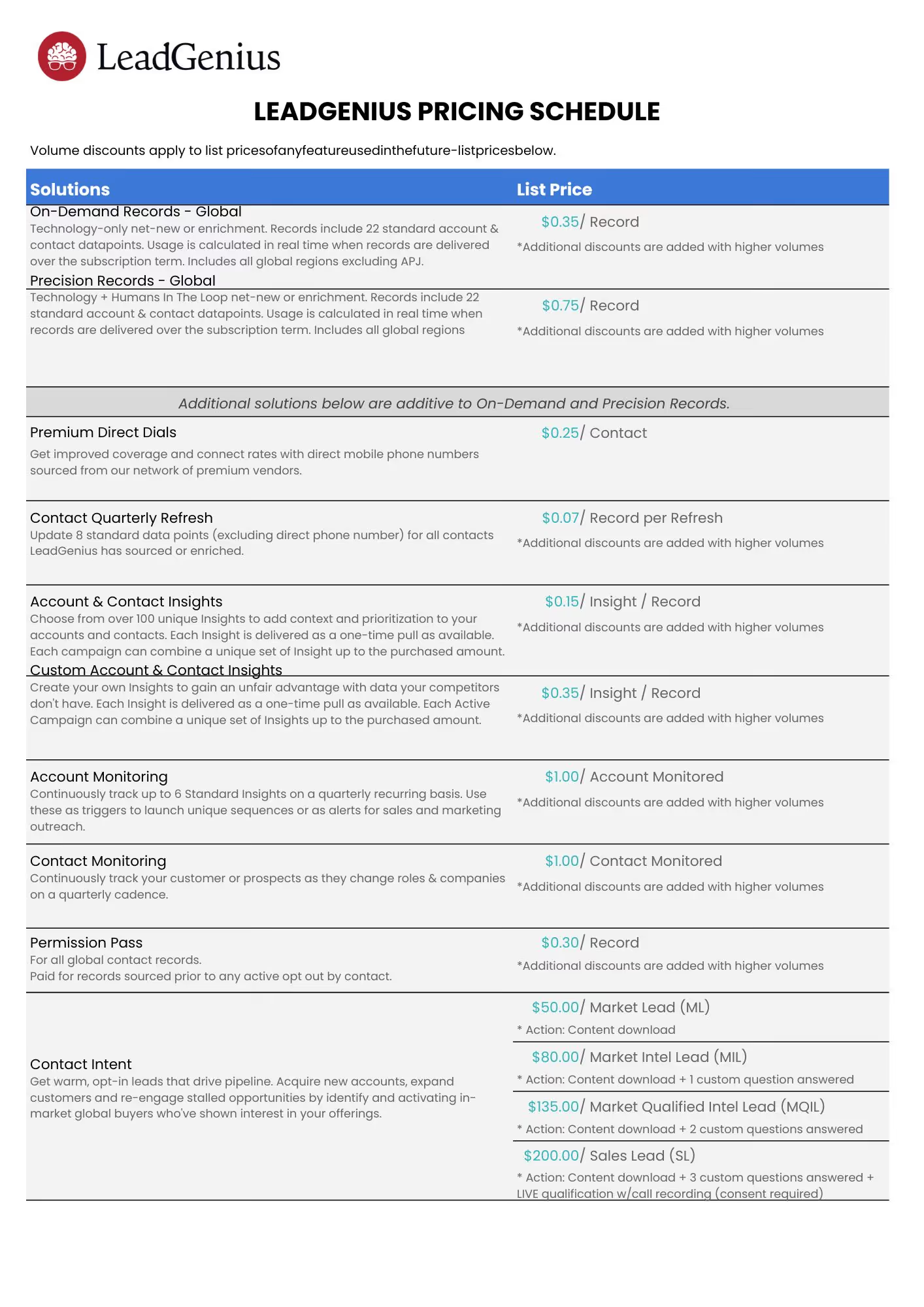
LeadGenius takes a different approach. Every line item on the pricing schedule is priced per unit of work delivered. You pay for the records you receive, the insights you pull, the contacts you monitor, and the qualified leads you generate — and nothing else. No seat minimums. No "platform fee." No credits that expire at midnight on December 31st.
Here's how it actually works, line by line, and why this matters if you're tired of renewal sticker shock.
§ 01 · The Foundation Net-new and enrichment records
Every B2B data program starts with the same question: do you want machine-generated records fast and cheap, or human-verified records slower and more accurate? LeadGenius lets you choose per campaign rather than locking you into a tier.
Both are billed in real time as records are delivered, which means a quiet month genuinely costs less than a busy one. Try getting that from ZoomInfo.
§ 02 · The Layer Build the program you actually need
Everything below the record line is additive. You don't have to buy it, and you don't have to pre-commit to it. If your team discovers mid-year that direct dials matter more than originally scoped, you add direct dials. If intent data turns out to be noise for your category, you stop buying intent. The schedule is a menu, not a bundle.
§ 03 · The Engine Monitoring turns data into a system
The pricing schedule includes two monitoring products that quietly do more than they look like they do.
Both are billed per object tracked, so the cost scales with the size of the program you actually run, not with how many people happen to have a login.
§ 04 · Compliance Privacy as its own line item
§ 05 · The Ladder Contact Intent priced as actual leads
The bottom of the schedule is the most interesting, because it's where the unit of pricing finally changes — from records to actual leads. These are warm, opt-in leads — global in-market buyers who've shown active interest in your offering and answered increasingly detailed qualification questions before reaching your reps.
| Lead Tier | Price | What you receive |
|---|---|---|
| Market Lead ML |
$50 | Content download |
| Market Intel Lead MIL |
$80 | Content download + 1 custom question answered |
| Market Qualified Intel Lead MQIL |
$135 | Content download + 2 custom questions answered |
| Sales Lead SL |
$200 | Content download + 3 custom questions + live qualification with call recording (consent required) |
Compare that to the all-in cost of producing the same lead through paid search plus SDR follow-up. Most B2B teams spend more than $200 producing an inbound MQL that's strictly worse signal than an MQIL. The unit economics here aren't subtle.
§ 06 · Why this matters Five structural differences
The list prices above are anchors — volume discounts apply to any feature used in the future, and the schedule explicitly notes that additional discounts arrive with higher volumes on essentially every line. So the real money question isn't "is $0.35 cheaper than ZoomInfo per record?" It's structural.
You're not paying for shelf space.
A seat license bills you whether the rep is in the platform or not. A usage model bills you when work is delivered. If half your team is in onboarding for six weeks, your bill reflects that.
You're not pre-committing to a mix.
A bundle forces you to guess your annual mix of net-new versus enrichment versus insights versus direct dials twelve months in advance. The schedule lets you discover the right mix as the year unfolds.
You're not paying for re-pulls.
Quarterly refresh at $0.07 is the line item that breaks the seat-license model's worst incentive — the one that has competitors quietly hoping your data goes stale so you re-buy it.
You're not subsidizing other customers' compliance costs.
Permission Pass is its own SKU. So is direct dial sourcing. So is human verification. The price of a record reflects the work done on that record.
You can scale down as easily as up.
This is the part seat-license vendors hate to acknowledge. If your team shrinks, your seat count doesn't — your bill does, but only at renewal, and only if you fight for it. With usage pricing, a smaller team using less data just costs less.
§ Coda The honest comparison
Usage-based pricing isn't automatically cheaper than seat licenses. If you have 50 reps who all aggressively use a data platform every day, ZoomInfo's bundle might come out ahead on raw record cost. The point isn't that LeadGenius wins every TCO calculation in the abstract — it's that the model aligns the vendor's revenue with the customer's actual consumption.
That alignment matters because it changes what the vendor optimizes for. A seat-license vendor optimizes for renewal regardless of usage. A usage-based vendor only gets paid if you keep finding the data valuable enough to keep pulling it. The incentives point in the same direction as yours.
If you've ever been the person trying to justify a data spend that doesn't match the actual ROI your reps experienced, you already know which model you want.
.avif)