
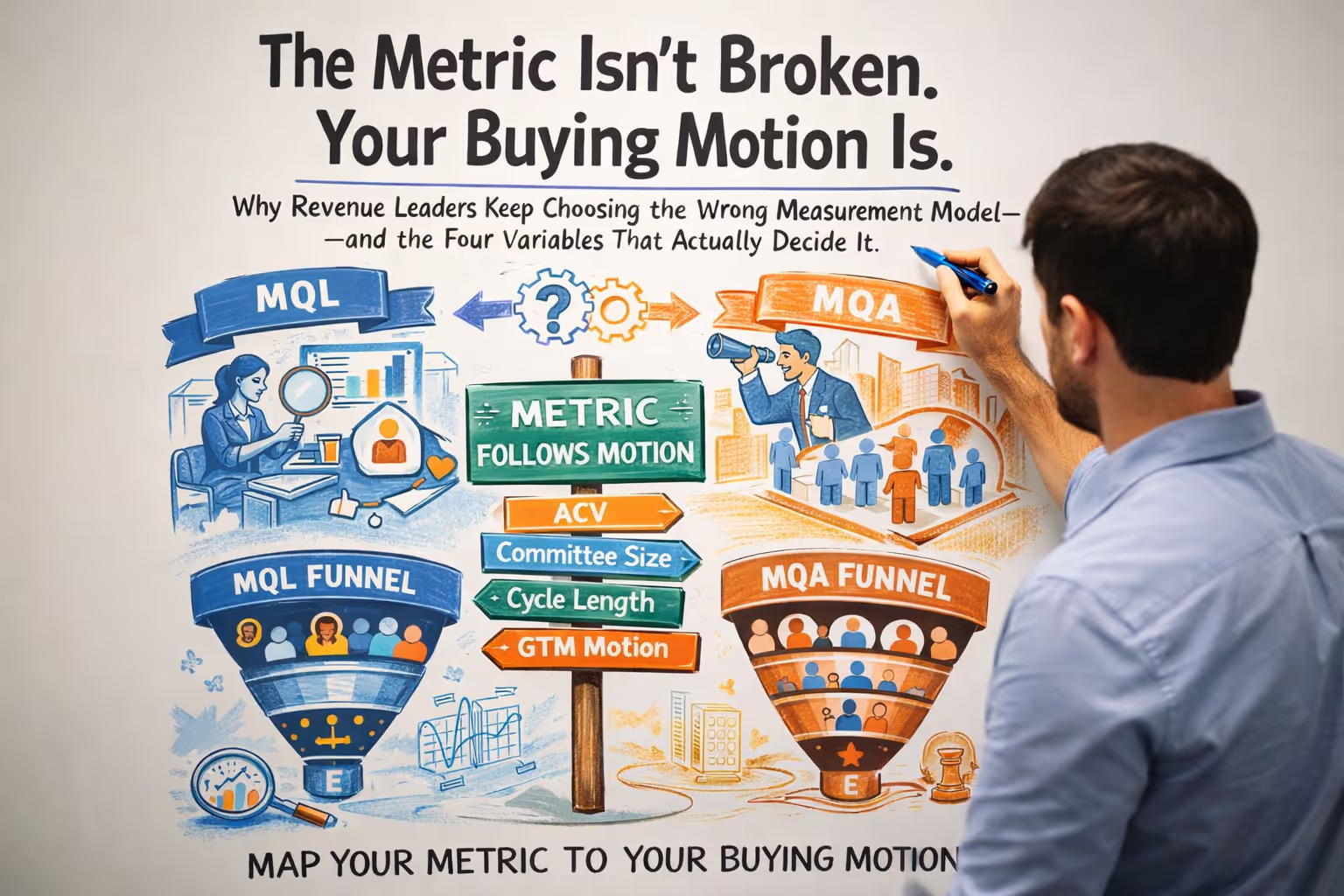
Every eighteen months or so, B2B marketing goes through a collective identity crisis over the same question: are we measuring the right thing?
Right now the argument is MQL versus MQA. One camp says the marketing qualified lead is a relic of single-threaded selling—a vanity metric that inflates pipeline reports while deals stall in committee. The other camp says the marketing qualified account is an over-engineered abstraction that makes it nearly impossible to attribute effort, compensate reps, or run a clean handoff.
Both camps have evidence. Neither has the full picture. And the reason is deceptively simple: they’re debating the instrument while ignoring the terrain.
The metric is not the problem. The mismatch between the metric and your buying motion is the problem. And until you fix that, swapping one acronym for another is just rearranging deck chairs.
The Industry Loves a Universal Answer
Marketing’s relationship with metrics follows a predictable arc. A framework emerges, gets evangelized by a well-funded platform, gets adopted as gospel, and then gets blamed when results don’t follow. MQLs had their heyday in the demand-gen boom of the 2010s. ABM platforms then declared them dead and coronated MQAs as the modern successor. Now we’re watching a correction where practitioners are admitting that neither metric works universally—and that the real answer depends on context most thought leaders would rather not unpack.
The pattern isn’t about bad metrics. It’s about the industry’s chronic preference for prescriptive answers over diagnostic thinking. We want someone to tell us what to measure so we can skip the harder question of how our customers actually buy.
Why MQL Gets Blamed for Enterprise Complexity
The standard indictment of the MQL goes like this: B2B buying decisions involve committees of six to thirteen people. Tracking a single lead as “qualified” ignores all the other stakeholders who influence the deal. Sales gets a name, marketing gets credit, and the pipeline report looks healthy—right up until the deal stalls because nobody engaged the CFO, the procurement lead, or the end-user champion.
That’s a real failure mode. But notice what it actually diagnoses: it’s not a failure of the MQL concept. It’s a failure to match a single-threaded metric to a multi-threaded buying motion. In a world where one person can evaluate, decide, and purchase—think mid-market SaaS at a $15K ACV with a 30-day cycle—an MQL works perfectly well. The metric breaks when you drag it into a context it was never designed for.
Why MQA Gets Overprescribed as the “Modern” Answer
MQA advocates respond with a reasonable correction: track engagement at the account level, not the individual level. If three people from the same company are downloading content, attending webinars, and visiting your pricing page, that account is showing buying intent regardless of whether any single person crossed a lead-score threshold.
The logic is sound for complex enterprise deals. But the MQA model introduces its own failure modes when applied indiscriminately. It’s harder to operationalize—most CRMs still run on lead objects, not account objects. It obscures individual attribution, making it difficult to compensate SDRs or measure channel performance. It takes months to materialize under tight definitions, which creates reporting lag that makes weekly pipeline reviews nearly useless. And it implicitly assumes every company runs an ABM motion, which simply isn’t true.
Prescribing MQAs for a velocity-based inbound motion is the mirror image of prescribing MQLs for a complex enterprise motion. Both are wrong for the same reason: they’re forcing a metric onto a motion it doesn’t fit.
The Four Variables That Actually Matter
If neither metric is universally right or wrong, what determines which one fits? After synthesizing dozens of practitioner perspectives and running this question through real pipeline data, four variables consistently surface as the deciding factors.
1. Average Contract Value (ACV)
ACV is the simplest proxy for how much scrutiny a deal will receive. At $10–20K, a single budget-holder can often approve. At $100K+, procurement gets involved, legal reviews terms, and finance models the TCO. The higher the ACV, the more stakeholders enter the frame—and the more you need account-level visibility rather than individual lead tracking.
2. Buying Committee Size
This is related to ACV but not identical. Some mid-market deals involve surprisingly large committees due to organizational culture or regulatory requirements. If your typical deal touches five or more people, you need a metric that can see across contacts. If it’s one or two decision-makers, an individual-level metric gives you cleaner signal with less operational overhead.
3. Cycle Length
Short cycles (under 45 days) reward speed and volume. You need metrics that update fast enough to inform weekly decisions: how many leads came in, how many converted, what’s the velocity from form-fill to meeting. Long cycles (90+ days) reward depth and progression. You need metrics that track multi-touch engagement over time across an entire account, because no single interaction will predict the outcome.
4. GTM Motion
This is the most overlooked variable. An inbound-led motion generates known individuals who self-identify through content and forms—MQLs are a natural fit. An outbound or ABM-led motion starts with target account lists and tries to build engagement across buying committees—MQAs are a natural fit. A hybrid motion, which is what most growth-stage companies actually run, needs both metrics operating in parallel, each governing its respective funnel.
The Decision Framework: Metric Follows Motion
Rather than adopting a metric based on what’s fashionable or what your ABM vendor recommends, map it to your actual buying motion using these four variables. Here’s a practical framework:

The key insight is that most companies don’t live cleanly in one box. Your mid-market inbound motion might be pure MQL territory, while your enterprise outbound motion demands MQAs. That’s fine—run dual funnels. What’s not fine is forcing one metric across both motions and then blaming the metric when conversion rates diverge wildly between segments.
Stop Buying Platforms Before You’ve Mapped the Motion
Here’s where this gets expensive. Most measurement failures aren’t conceptual—they’re operational. A company decides MQAs are the future, buys an ABM platform, and then tries to retrofit their CRM, their SDR workflows, their compensation plans, and their board reporting around a metric that may not match half their pipeline.
The sequence should be reversed. First, map how your customers actually buy. Segment by ACV, committee size, cycle length, and motion. Then choose the metric that fits each segment. Then evaluate whether your current stack supports that metric—or whether you need to change tooling. The metric follows the motion. The platform follows the metric. Not the other way around.
The Real Cost of Choosing Wrong
When you measure with the wrong instrument, the distortion compounds at every stage. Marketing optimizes for volume when it should optimize for coverage. Sales rejects leads that are actually signals. Pipeline reviews become arguments about data quality instead of strategy sessions about deal progression. And the board sees a funnel chart that has almost no predictive relationship to revenue.
None of that is because MQLs are dead or because MQAs are the cure. It’s because someone chose a metric based on a conference keynote instead of their customer’s buying behavior.
Fix the match. The metrics will follow.
.avif)