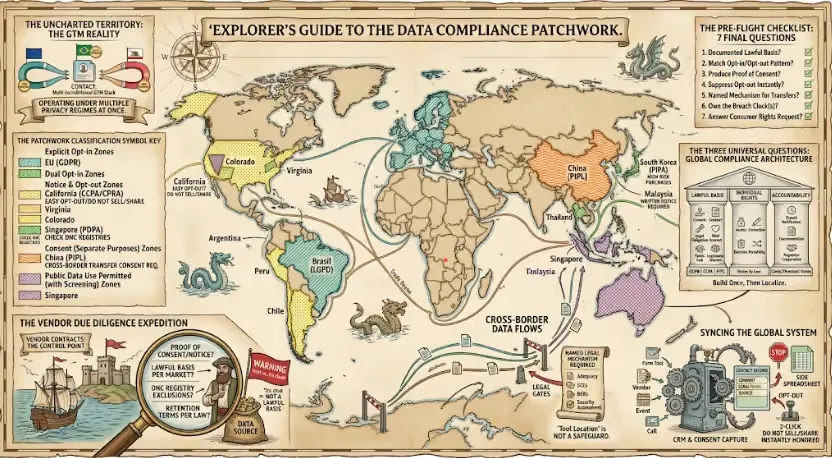
Guide
The 2026 Ultimate Guide to Global Data Compliance
2026 Guide to global data compliance.
How to Find and Activate Customers Without Breaking the Law
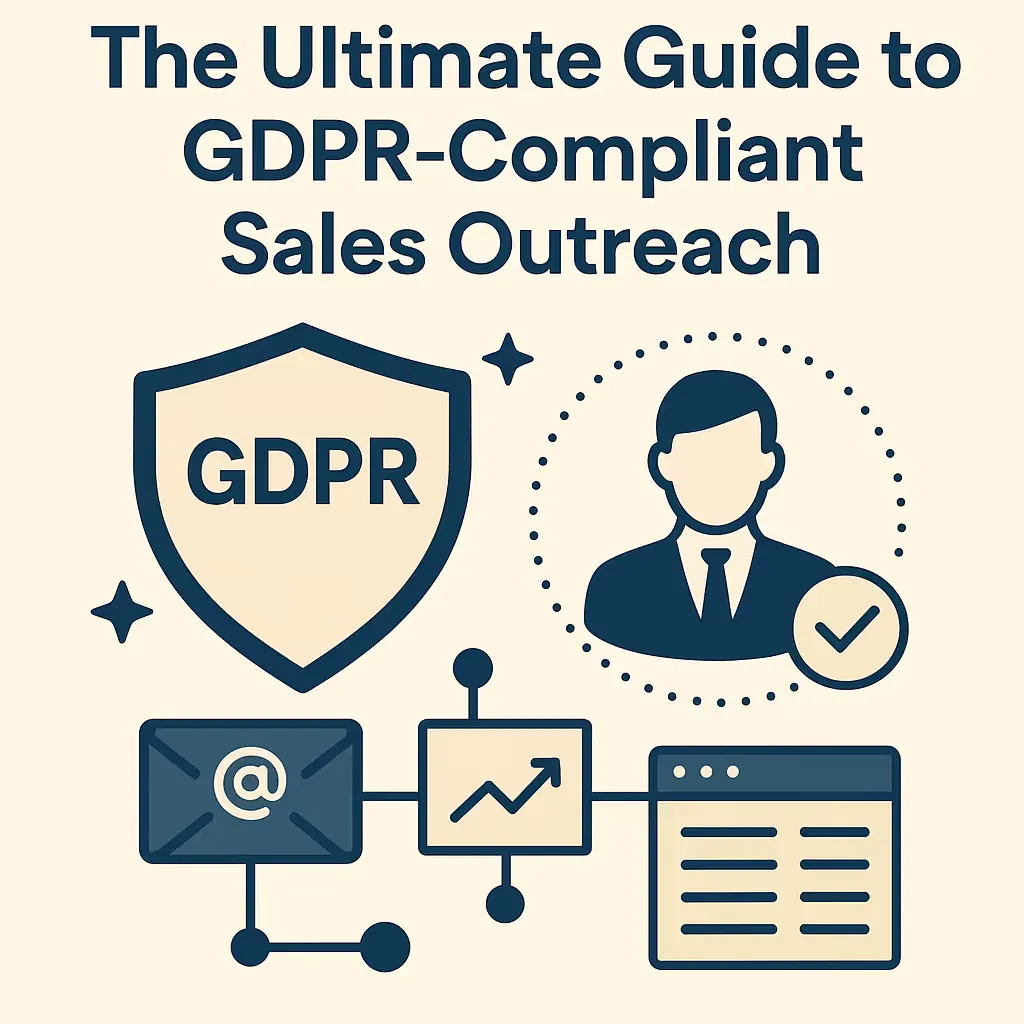
GDPR isn’t just a European compliance headache—it’s the new foundation for global trust. Since May 25, 2018, every sales and marketing team touching EU citizen data has been required to handle personal data responsibly. That means:
And this isn’t limited to EU-based companies—if you process even one EU prospect’s data, you’re in scope.
Yet here’s the paradox: B2B sales is still a race. 50% of sales go to the first vendor to respond. So the question becomes: How do you balance speed, personalization, and compliance in sales outreach?
GDPR defines personal data broadly. In sales outreach, this can include:
This means sales teams can’t treat contact data as “public” just because it’s on a website or LinkedIn. How you collect, process, and use that data matters.
GDPR-compliant sales starts with three pillars:
The SuperOffice GDPR checklist provides a useful baseline:
LeadGenius’ contribution is helping sales teams actually operationalize this framework at scale.
Old Way: Blast lists from ZoomInfo or Apollo and hope something sticks.
GDPR Way:
LeadGenius Best Practice: Instead of static lists, use account signals (funding, hiring trends, new locations, product launches) to justify outreach relevance and legitimate interest. A signal-based email that references real business changes has far higher engagement and stands on stronger compliance footing.
Compliant: Connecting via LinkedIn, engaging on posts, and moving the conversation forward.
Risk: Treating LinkedIn connections as an email opt-in.
Best Practice:
LeadGenius Best Practice: Use technographic insights (e.g., “We saw your team is hiring Kubernetes engineers”) to spark meaningful LinkedIn conversations instead of generic pitches.
High Risk: Purchased lists are rarely compliant unless you have documented proof of consent.
GDPR-Compliant Play: Only use lists where consent transfer is provable.
LeadGenius Best Practice: Replace purchased lists with bespoke data sourcing. LeadGenius crawls 40M+ websites in real time, pulling only the accounts and contacts that fit your ICP and filtering with compliance baked in. No gray-market lists, no compliance risk.
Compliant: GDPR doesn’t ban cold calls—but consent is required before sending marketing emails afterwards.
Best Practice:
LeadGenius Tip: Document call outcomes and opt-ins automatically in your CRM so your DPO has proof if audited.
Compliant: You can follow up one-to-one, but you can’t automatically add business card contacts to your email list.
LeadGenius Best Practice: Scan and log business cards into CRM tagged as “networking outreach only.” Only shift to marketing if/when the contact explicitly opts in.
Compliant: You can contact referrals directly, but the gold standard is when your customer introduces you via email (digital proof of consent).
LeadGenius Best Practice: Provide referral templates for happy customers to send on your behalf. Keep these introductions tied to case studies or proof points to show “legitimate interest.”
Compliant: Only collect what you truly need. Be explicit about purpose. Use opt-in checkboxes for marketing lists.
LeadGenius Best Practice: Enrich form fills using Contact Activation Service (turning Gmail signups into verified work contacts) while ensuring privacy compliance. This allows you to maximize value from inbound without breaking GDPR rules.
Here’s how LeadGenius future-proofs outreach:
GDPR isn’t a sales blocker—it’s a filter. It forces you to focus on quality prospects who want to hear from you. When paired with bespoke data and account signals, you not only stay compliant—you also:
The future of sales outreach isn’t static lists—it’s custom, compliant insights at scale. That’s where LeadGenius thrives.
Guide
2026 Guide to global data compliance.
Guide
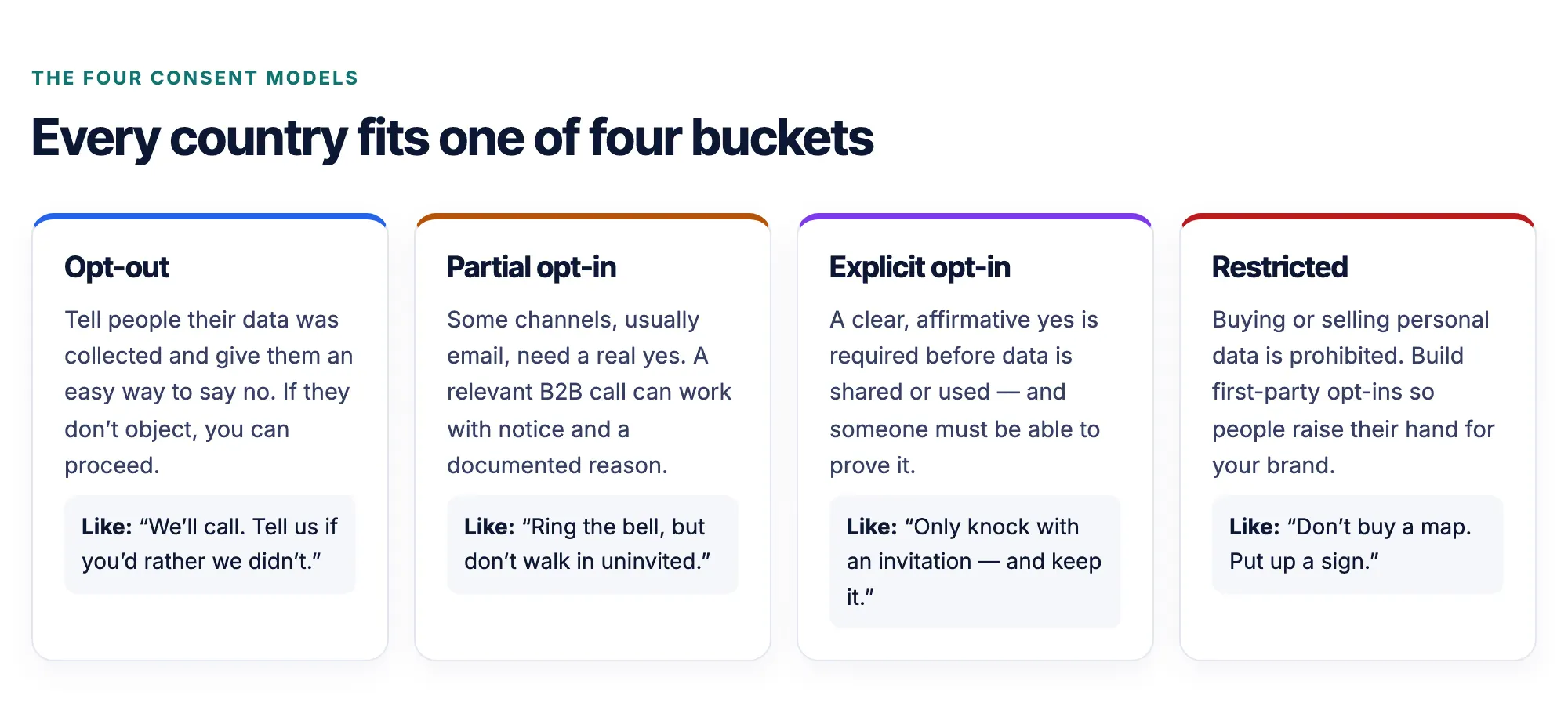
Country-by-country rules for compliant B2B outreach in 21 countries: consent models, Do-Not-Contact registries, vendor obligations and LeadGenius consent services.
Article
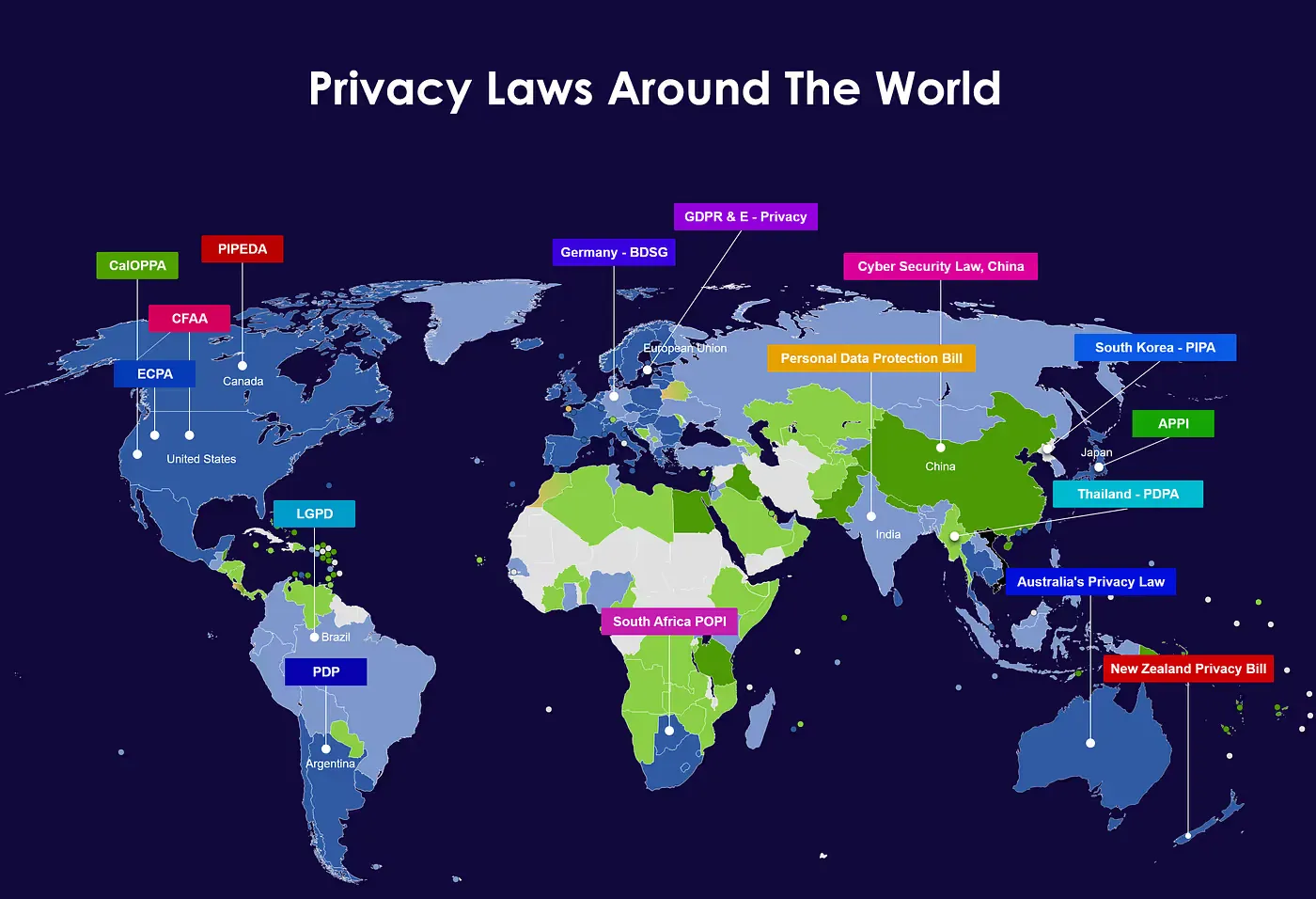
LeadGenius' guide covers data privacy regulations, compliance frameworks, audits, training & tech safeguards to enhance global strategies & build consumer trust.

Get precise, compliant, and on-demand contact data—tailored to your business needs.