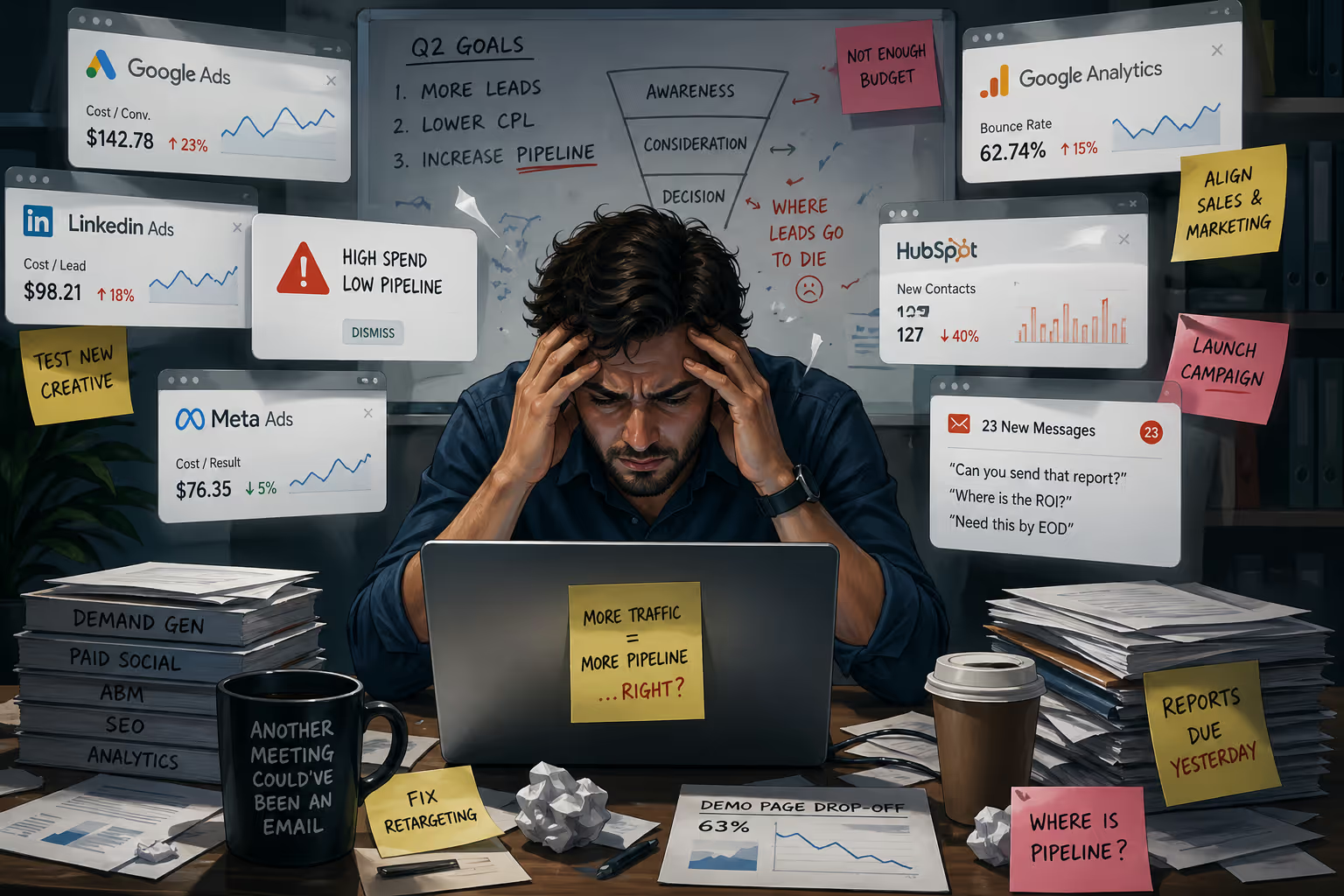
You're spending $18K a month on digital ads. You're getting 23 MQLs. Your LinkedIn CPMs are climbing every quarter. And 87 people visited your demo page last month and left without booking. That's not a hypothetical. That's exactly what we found when an emerging player in the HRIS space asked us to run an AdGenius Performance Blueprint.
They thought their campaigns were performing. The dashboards showed impressions, clicks, and form fills. But when we connected our pixel, linked their ad accounts, and let the data tell the real story — the picture looked very different.
The Three Problems Hiding Behind the Dashboard
Problem #1: LinkedIn saturation was driving CPMs through the roof.
This company was spending $14K of their $18K monthly budget on LinkedIn alone — 78% of total spend in a single channel. They were targeting HR Directors, CHROs, and VP People at mid-market companies. The problem? So was Rippling. So was ADP. So was Gusto, Deel, and Namely. Every HRIS vendor in the market was competing for the same 50,000-person LinkedIn audience.
Their average LinkedIn CPM had climbed from $68 to $112 over three quarters. Frequency was rising. Click-through rates were declining. They were paying more every month to reach the same saturated audience with diminishing returns.
Problem #2: Google was a keyword warzone with collapsing ROI.
The company was spending $3K on Google Search — but on the most competitive terms in HRIS: "HR software," "HRIS platform," "payroll software." These are $28–$45 CPC keywords where ADP and Rippling routinely outbid everyone. They were getting clicks, but at a cost per demo that made the math almost impossible.
Meanwhile, lower-competition long-tail terms — "employee onboarding software for mid-market," "HRIS for 200-500 employees," "HR platform with benefits administration" — were completely untouched. The team had defaulted to obvious keywords and never tested the intent layer below.
Problem #3: 87 demo-page visitors walked away with zero follow-up.
This was the finding that changed the conversation. Our pixel identified 87 unique visitors who navigated directly to the company's /request-demo page and left without converting. These weren't casual browsers — they clicked through pricing, read the features page, and made it all the way to the demo form before bouncing.
No retargeting followed them. No outreach. No second touch. Without a de-anonymization layer, they were invisible — just a bounce rate, not a pipeline.
Demo-page visitors with zero follow-up.
These prospects navigated past the homepage, past pricing, past features — all the way to the demo form. They showed the strongest buying intent on the entire site. And without visitor identification and cross-channel retargeting, every one of them disappeared.
What the Performance Blueprint Revealed
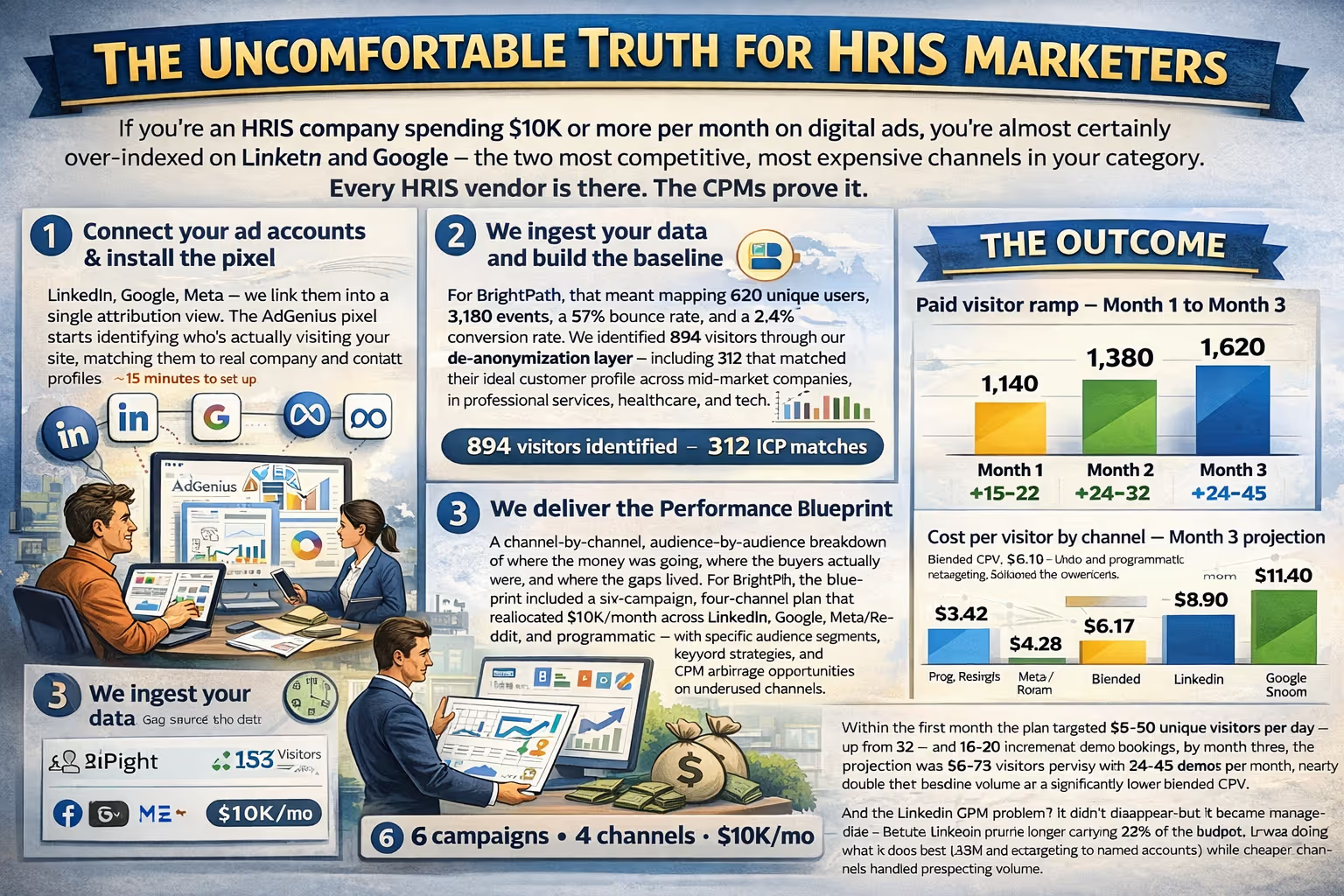
Here's what happens when you connect to AdGenius. It takes about 15 minutes.
The Outcome
Within the first month, the plan targeted 35–50 unique visitors per day — up from 22 — and 15–22 incremental demo bookings. By month three, the projection was 55–75 visitors per day with 34–45 demos per month, nearly double their baseline volume at a significantly lower blended CPV.
The channel arbitrage was the real story. Meta and Reddit — channels the company had barely tested — delivered CPVs under $4.30, compared to LinkedIn at nearly $9. Programmatic retargeting of the 87 demo-page non-converters came in at $3.42 per visitor. The HRIS audience exists on more channels than LinkedIn. Most vendors just hadn't looked.
And the LinkedIn CPM problem? It didn't disappear, but it became manageable — because LinkedIn was no longer carrying 78% of the budget. It was doing what it does best (ABM and retargeting to named accounts) while cheaper channels handled prospecting volume.
The Uncomfortable Truth for HRIS Marketers
If you're an HRIS company spending $10K or more per month on digital ads, you're almost certainly over-indexed on LinkedIn and Google — the two most competitive, most expensive channels in your category. Every HRIS vendor is there. The CPMs prove it.
The Performance Blueprint takes 15 minutes to set up and about a week to deliver. It shows you which channels are oversaturated, where your demo-page visitors are disappearing, and where the CPM arbitrage opportunities actually live. It's not a sales pitch — it's a mirror. And for HRIS marketers competing against Rippling's Super Bowl budget, that mirror matters more than ever.
Ready to see what your HRIS paid media is actually doing?
The Performance Blueprint is free. The setup takes 15 minutes. The insights change everything.
Book a Performance Blueprint.avif)