
Better data. Better filters. More precise job titles. Cleaner firmographics. Maybe layer in intent. Maybe enrich it. Maybe rebuild the audience again, just slightly differently this time.
It feels productive. It feels fixable. It gives teams something to do.
But the uncomfortable truth (the one that rarely gets said out loud in QBRs or pipeline reviews) is that most teams already know who their buyer is.
Not perfectly. But well enough.
They can describe the ICP in detail:
- VP-level security leaders at mid-market SaaS companies
- Heads of RevOps in $50M–$500M orgs
- Directors of IT at companies hiring aggressively
They can build those lists in a day. Sometimes in an hour.
The problem isn't identifying the buyer. The problem is what happens after you identify them.
The Illusion of Reach
On paper, modern paid media looks like total coverage. You're on LinkedIn (for precision), Google (for intent), display and programmatic (for scale), maybe Meta or Reddit (for efficiency arbitrage). Each platform tells you the same story: you're reaching your audience.
And technically, that's true.
But the experience of the buyer (the actual human being moving through this system) tells a very different story. Because what feels like "coverage" from the inside looks like fragmentation from the outside.
What Actually Happens to a Buyer
Follow one person.
Each system is working as designed. Each system is "optimizing." Each system believes it is responsible for driving the eventual conversion.
But none of them know the others exist.
Three Campaigns, One Buyer, Zero Coordination
From the marketer's perspective, this looks like coverage.
From the buyer's perspective, it looks like chaos.
- A coordinated, intelligent brand showing up consistently
- Messaging that builds over time
- Channels that feel intentional
- A brand that knows where they are in the journey
- The same company following them in slightly different ways
- Messaging that repeats instead of progresses
- Frequency that feels overwhelming, not intentional
- No apparent memory of what they've already seen
Frequency isn't managed across channels. Sequencing isn't coordinated. Messaging isn't cumulative. It's not a conversation. It's noise.
And Yet... the Dashboards Look Great
Here's where it gets more interesting. Internally, nothing looks broken. LinkedIn shows engagement. Google shows conversions. Programmatic shows reach. Each dashboard has its own attribution logic. Each platform claims some version of success.
Each one can produce a narrative where it was essential to the outcome.
So the system persists. Not because it works well, but because it's impossible to disprove from inside the silos.
This isn't a targeting problem. It's a systems problem.
When performance feels off, teams instinctively go back to the top of the funnel: maybe our ICP is wrong, maybe we need better intent data, maybe we need more signals. But the issue isn't who you're targeting. It's the infrastructure that activates that targeting.
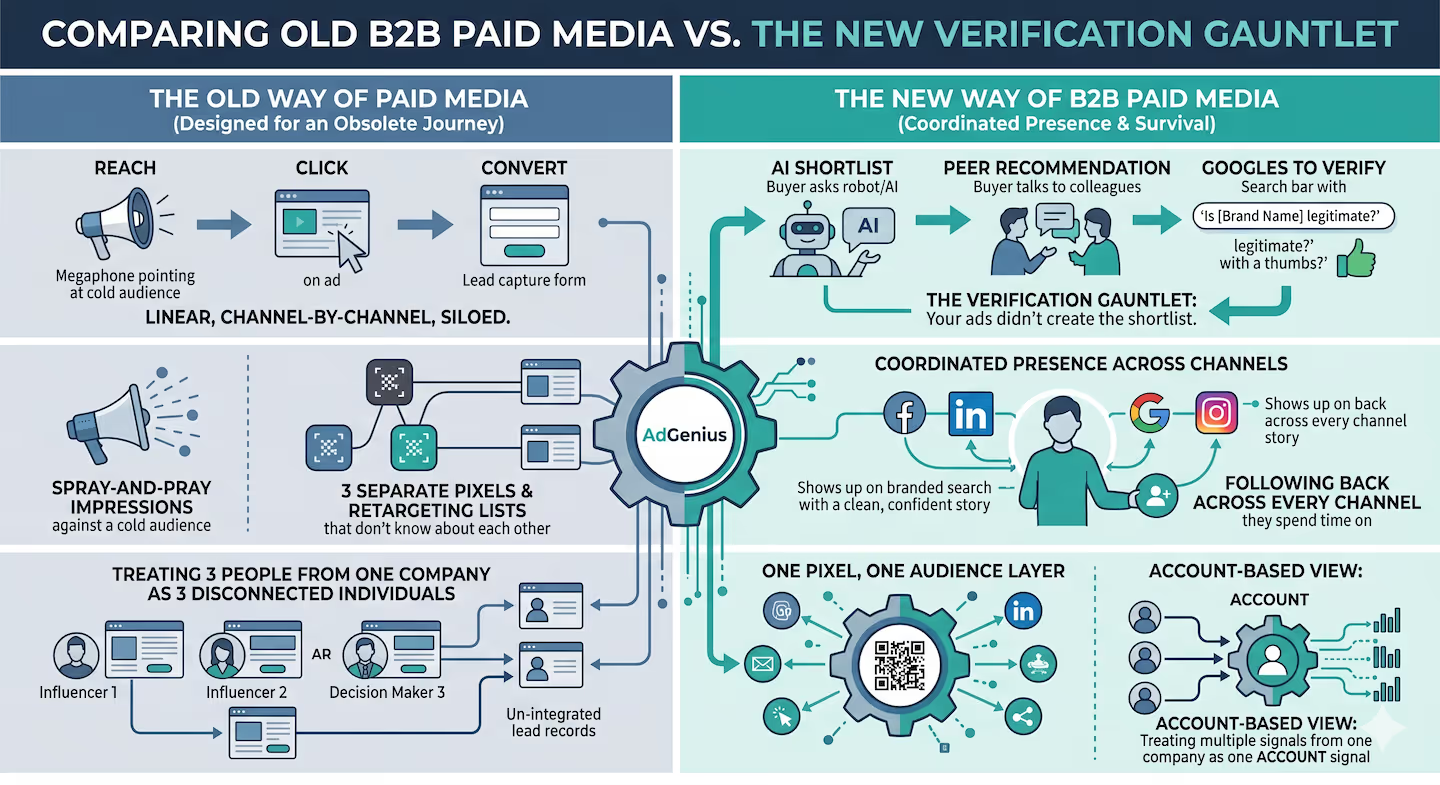
- Separate pixels per channel
- Separate audience pools
- Separate optimization algorithms
- Separate definitions of success
- No shared frequency logic
- No cross-channel sequencing
- One pixel across all channels
- Unified audience layer, real-time
- Shared optimization logic
- One definition of pipeline success
- Cross-channel frequency caps
- Messaging that builds, not repeats
You're not running one strategy. You're running multiple independent systems that happen to share a budget.
The Real Reach Problem
This is why "reach" in B2B paid media is so misunderstood. Teams think reach means: can we get in front of the right people? But the real question is: can we stay coherent in front of the same person over time?
And that's where everything breaks. Because the moment a buyer moves between channels (which they always do) your system loses continuity. Not visibility. Continuity.
The New Buyer Journey Makes This Worse
This fragmentation wasn't always fatal. In a simpler funnel (awareness → click → convert) you could get away with it. But that funnel doesn't exist anymore.
The modern journey looks more like this:
- Ask AI for a shortlist
- Ask peers for validation
- Google the surviving names
- Go deep on one or two
By the time paid media matters, the buyer is already filtering. Already verifying. Already deciding who's credible.
Which means your job isn't to create awareness. It's to survive scrutiny.
When a buyer Googles your brand, what do they see? When they visit your site and leave, what happens next? When three stakeholders from the same account engage separately, do you treat that as one buying group or three individuals? Most systems can't answer those questions cleanly. Not because the data doesn't exist, but because the systems that process the data don't talk to each other.
What a Coordinated System Actually Looks Like
Fixing this doesn't require more data. It requires a different architecture.
- One pixel that captures activity across all channels
- One audience layer that updates in real time
- Shared logic for sequencing and frequency
- Cross-channel awareness of what the buyer has already seen
Now, instead of three campaigns chasing the same person independently, you have one coordinated pursuit of a single buyer. Messaging builds instead of repeats. Frequency feels intentional instead of overwhelming. Channels reinforce each other instead of competing.
The Strategic Shift
The teams that figure this out early will look unusually effective. Not because they have better creative. Not because they spend more. But because they've aligned their infrastructure with how buying actually works now.
They've stopped asking: how do we reach more people? And started asking: how do we stay coherent with the right ones?
Your ICP is reachable. It always has been. The issue isn't access. It's orchestration.
Until that changes, most paid media programs will continue to look successful on dashboards while feeling strangely ineffective in practice.
Because you can't coordinate pursuit from inside a silo. And right now, most stacks aren't strategies. They're silos wearing coordination as a costume.
.avif)