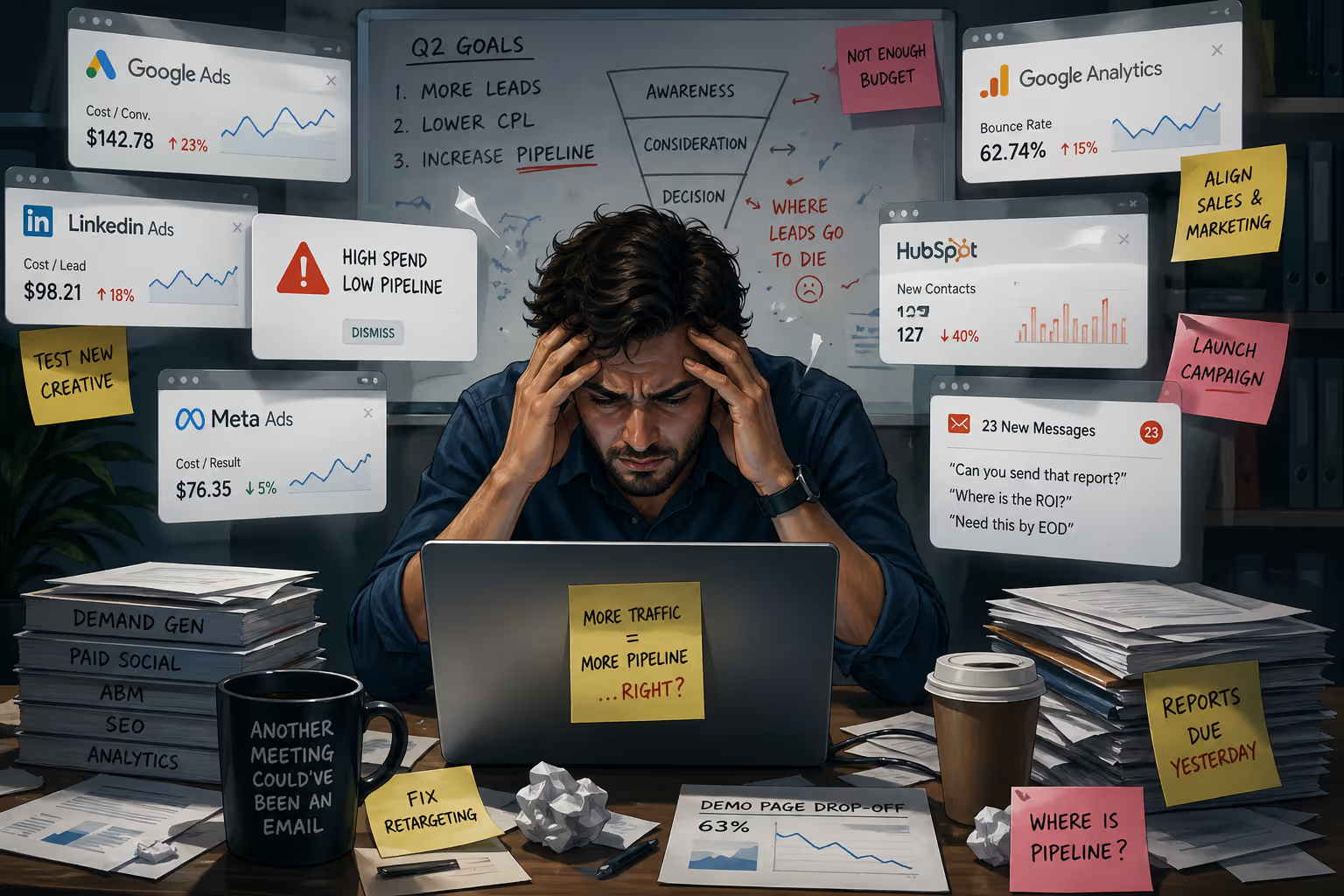
There are moments when an industry crosses a line—not because of a hot take or a Twitter thread, but because a court document exists.
This is one of those moments.
Cognism has agreed to a privacy class action settlement tied to how individuals’ contact data was allegedly displayed to free-trial users. This isn’t a hypothetical risk or a regulatory warning shot. It’s a real legal event with named states, defined time windows, a settlement fund, and cash payouts to affected individuals.
And for demand gen, RevOps, and data leaders, the implications go well beyond Cognism.
What Actually Happened (and Why It Matters)
The lawsuit alleged that individuals who were not Cognism users had their contact profiles viewed by free-trial users, potentially violating privacy and publicity laws across multiple U.S. states.
Cognism denied wrongdoing—but still agreed to settle.
That distinction matters less than people think.
Settlements like this don’t happen because of bad press.
They happen because risk exists once data is displayed, processed, or monetized without provable consent.
Which brings us to the uncomfortable part.
PLG + Data Is a Risk Multiplier
Product-led growth (PLG) is powerful. Free trials reduce friction, accelerate adoption, and turn software into a self-serve funnel.
But when the product itself exposes personal data, PLG quietly becomes a liability amplifier.
Why?
Because:
- Free users are harder to police
- Visibility expands faster than governance
- “Trial access” often blurs lines between evaluation and processing
If a free user can see contact-level data, the company enabling that visibility is making a legal claim—whether explicit or not—about its right to display that data.
Cognism just learned what happens when that claim gets challenged.
This Isn’t a Cognism-Only Problem
Zoom out for a second.
If this theory holds—and courts are willing to entertain it—then any SaaS data platform built on large-scale contact visibility is exposed.
That includes companies like:
- Apollo
- ZoomInfo
- Seamless.ai
Different sourcing models. Different compliance postures. Same structural risk:
Personal data being displayed, enriched, and activated at scale—often downstream of opaque consent chains.
Litigation doesn’t need everyone to be wrong.
It only needs one weak link.
The Real Exposure: Buyers, Not Vendors
Here’s the part most demand gen teams haven’t fully internalized yet:
Vendors don’t absorb all the risk. Buyers inherit it.
Especially in content syndication.
Let’s walk through the mechanics.
The Consent-Fraud Loop in Content Syndication
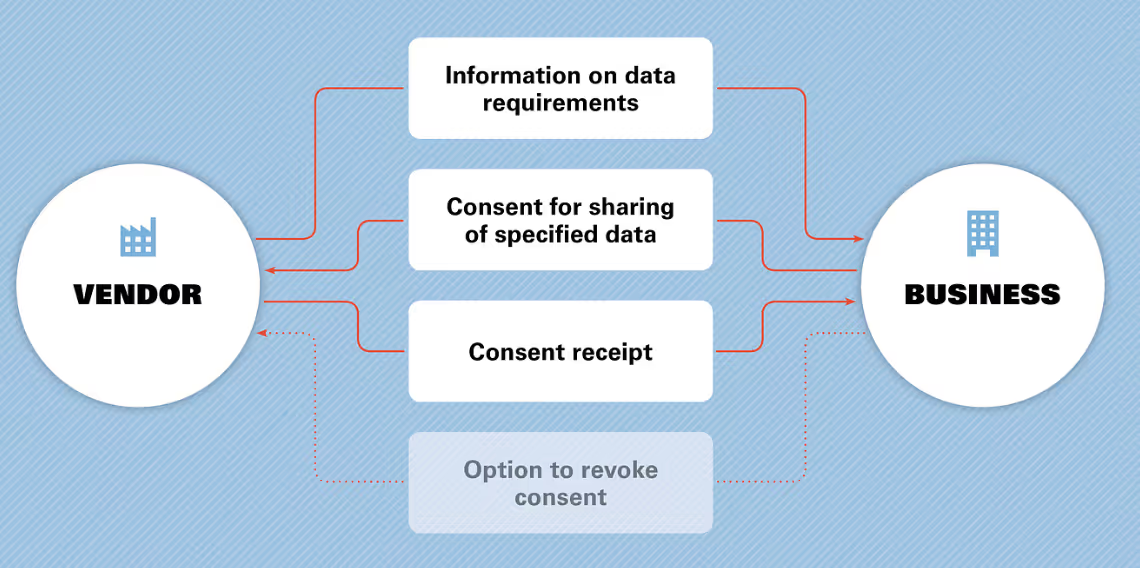
- A lead is sold as “opt-in”
- The buyer assumes the person:
- Visited their landing page
- Saw their consent language
- In reality:
- The person never touched the buyer’s page
- Consent occurred elsewhere—or is loosely inferred
- Buyer uploads the lead
- Buyer enriches it
- Buyer emails it
- Buyer routes it to sales
- Buyer retargets it with ads
At that moment, your company becomes the data processor of record.
Not the syndicator.
Not the data vendor.
You.
If consent is challenged, the question won’t be:
“Did the vendor say it was opt-in?”
It will be:
“Can you prove this individual consented to your processing?”
Screenshots won’t save you.
PDF attestations won’t save you.
Vendor assurances won’t save you.
Why This Gets Worse as Privacy Laws Spread
The Cognism settlement spans multiple states—and that list is growing every year.
As more states adopt laws modeled after California Consumer Privacy Act (and expand private rights of action), three things happen:
- Class definitions get broader
- Standing gets easier to establish
- Discovery gets uglier
This isn’t about GDPR panic redux.
It’s about U.S. plaintiffs with cash incentives and increasingly friendly venues.
The economics flip fast:
- One weak workflow
- One unverifiable consent chain
- One scalable practice (like content synd)
That’s all it takes.
The Industry Shift That’s Coming
What Cognism signals isn’t the end of data.
It’s the end of unprovable consent.
The next era of B2B data will be defined by:
- Verifiable user journeys
- Event-level proof of consent
- Buyer-specific authorization trails
- Suppression-first enrichment models
- Activation only after validation—not before
We’re publishing research soon that makes this measurable, not theoretical:
- Not “did the vendor say opt-in”
- Not screenshots
- Not legal PDFs
But actual evidence that a person:
- Reached the page
- Saw the language
- Took the action
- Authorized the use
Anything less is a risk you’re quietly warehousing.
The Question Every Demand Gen Leader Should Be Asking
If you’re buying content synd today:
How are you ensuring compliance—provably, defensibly, and at scale?
Because the Cognism settlement makes one thing very clear:
Privacy enforcement risk is no longer abstract.
And when it breaks, it won’t break evenly.
The weakest link always snaps first.
.avif)