
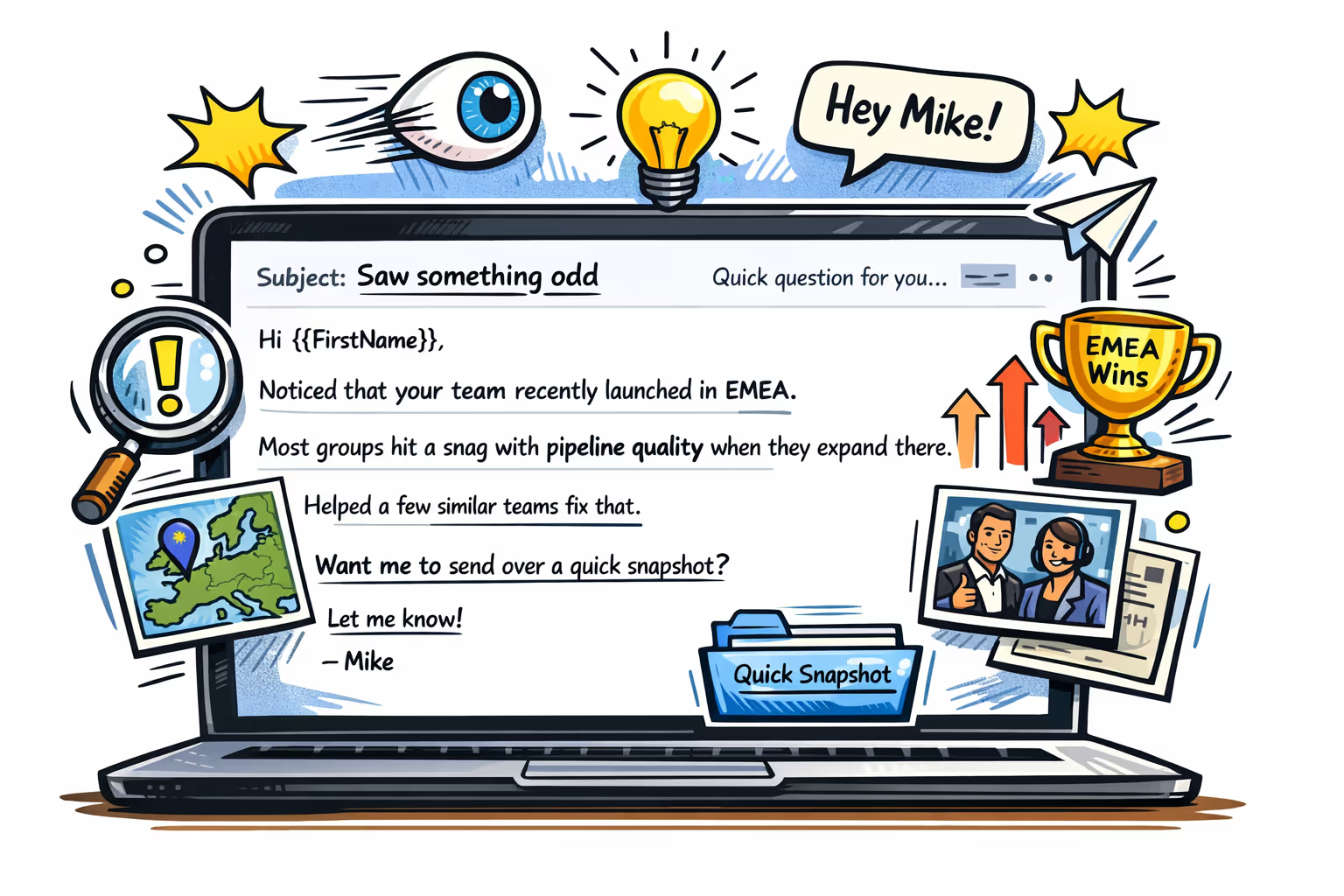
(Operating system for all future sequences)
This framework is built from large-scale cold email analysis (100M+ emails) and tuned specifically for Revenue Leaders, Marketing Leaders, and RevOps audiences who are drowning in templated outreach.
This is not about tricks.
It’s about earning attention.
1. Packaging: Subject Line + Preview Text
Goal: Get opened without looking like a cold email
Rules
- 4–5 words max
- Looks internal, not promotional
- Ambiguous but relevant
- Never smells like software, growth, pipeline, or meetings
What Works
Think:
- Something that could have been forwarded internally
- Slightly unfinished
- Casual
- Human
Examples
- “Quick question on this”
- “Saw something odd”
- “This caught my eye”
- “Noticed this pattern”
- “Worth flagging?”
If it sounds like marketing wrote it, it dies.
2. Body Formatting & Length
Goal: Make it frictionless to read on a phone
Rules
- 50–100 words total
- One sentence per paragraph
- White space > prose
- Zero jargon
Why
Most emails are skimmed, not read.
Dense paragraphs = instant delete.
3. Tone: Human > Polished
Goal: Feel like a peer, not a pitch
Rules
- Conversational
- Slightly imperfect is good
- No buzzwords
- Write how you’d Slack a colleague you don’t know well yet
Think:
“I noticed something and thought you might want to see it.”
Not:
“We help companies unlock scalable growth.”
4. Personalization That Actually Matters
Goal: Show relevance, not effort
The Opener (Critical)
Your first line must answer:
“Why me and why now?”
What Counts as Real Personalization
- A specific signal (hire, launch, expansion, tech change, funding, compliance shift)
- A pattern you’ve seen with similar companies
- A gap tied to their role
What Does Not Count
- Job title compliments
- “Saw you on LinkedIn”
- Generic industry fluff
AI Usage (Approved)
- Use AI to research fast
- Use AI to draft
- Always human-edit
If it sounds AI-perfect, it’s wrong.
5. Problem Framing (Challenger Style)
Goal: Reframe something they already feel but haven’t named
This is where you win.
Structure
- Name the problem they already suspect
- Show why the old way fails
- Hint at a better approach
Example Pattern
“Most teams try to solve X with Y.
The issue is Y breaks once Z happens.”
This aligns directly with your preferred formula:
- Here is your problem
- Here’s the benefit of solving it
- Here’s why what you tried failed
6. Social Proof (Non-Cringey)
Goal: Reduce perceived risk
Rule
If you can include it, always include it.
How
- Reference peers, not logos
- Similar size, market, or motion
- Keep it subtle
Example
“We see this a lot with mid-market SaaS teams expanding into EMEA.”
No case study dumps.
No logo soup.
7. The CTA: Ask for Interest, Not Time
Goal: Lower commitment, increase replies
Never Ask
- “15 minutes?”
- “Quick call?”
- “Demo?”
Always Ask
- Permission
- Interest
- Curiosity
High-Performing CTAs
- “Want me to send a quick snapshot?”
- “Worth sharing what we’re seeing?”
- “Open to a short example?”
- “Should I send over a sample?”
This keeps momentum without triggering calendar resistance.
8. Value First, Product Later
Goal: Teach before you sell
The best cold emails:
- Offer insight
- Offer evidence
- Offer clarity
They do not lead with:
- Features
- Platforms
- “We help…”
Product only shows up after curiosity.
9. Personality Is a Feature
Hard rule going forward
Boring ≠ safe
Boring = invisible
Personality:
- Gets read
- Gets replies
- Signals confidence
This is especially true for:
- Revenue leaders
- Founders
- RevOps
10. The Canonical LeadGenius Cold Email Structure
(What I’ll default to for you)
Subject: 3–5 words, internal feel
Body:
- Personalized, signal-based opener
- One sharp problem reframing
- Light social proof
- Value-based, low-friction CTA
That’s it.
.avif)