Contact-Level Technographics: The Missing Link in ABM for Engineering and Developer-Focused Sales
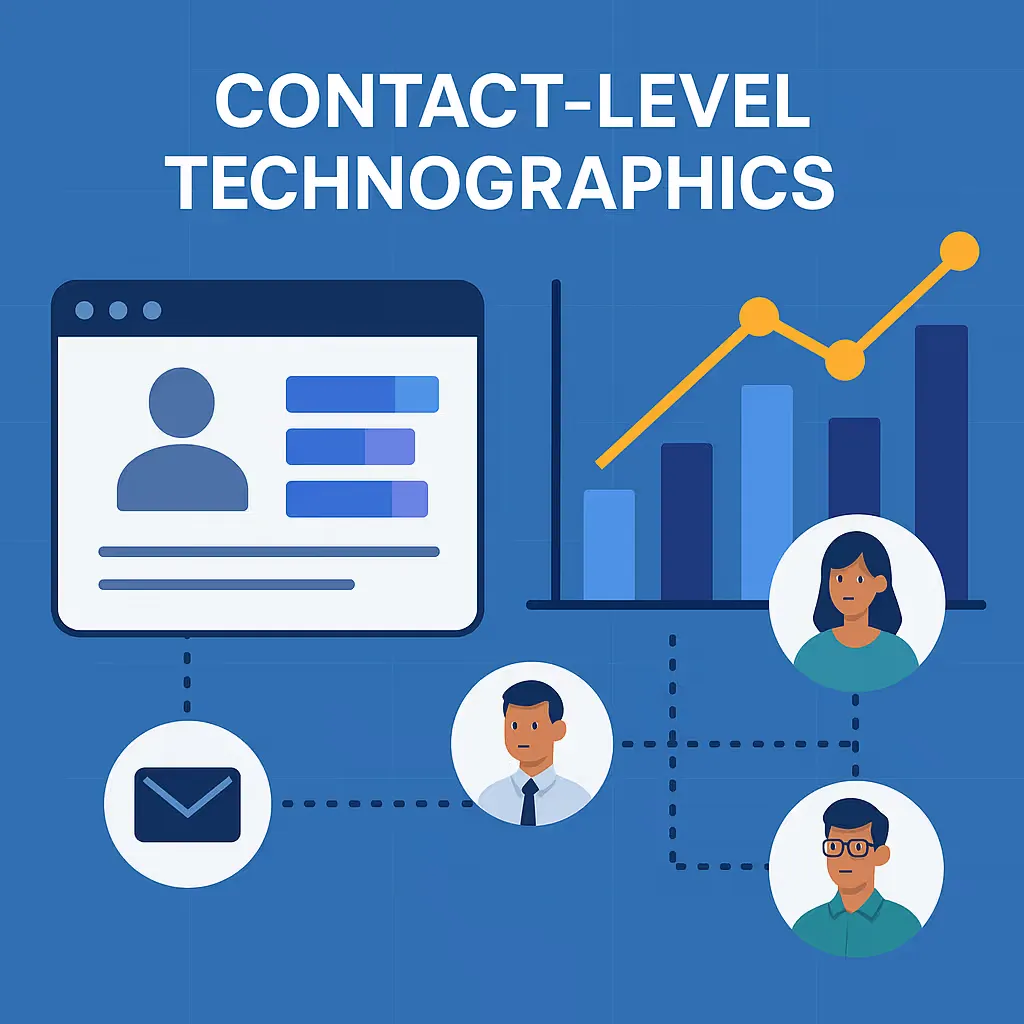
Contact-level technographics revolutionize ABM for technical sales by identifying 60 million engineers and developers, mapping their expertise through GitHub, LinkedIn, Stack Overflow, and Kaggle, and enabling hyper-personalized engagement based on real-world coding activity.
Article
For businesses selling to engineers and developers, traditional B2B data simply doesn’t cut it. These professionals operate in highly technical roles, often using specialized tools and technologies that standard firmographics or job title-based targeting fail to capture.
This is where contact-level technographics come into play—a revolutionary data layer that provides deep insights into individual developers and engineers, their expertise, and the technologies they actively use. By integrating this data into your Account-Based Marketing (ABM) strategy, you can radically improve targeting, personalization, and overall engagement with highly technical buyers.
Why ABM Needs Contact-Level Technographics
Most ABM strategies rely on firmographics (company size, industry, location) and intent signals (website visits, content consumption, ad engagement). While these are useful, they lack a direct understanding of individual technical expertise. For example:
A job title alone doesn’t tell you if someone actually uses your technology.
A company-level intent signal doesn’t reveal which developers influence purchase decisions.
Generic industry segmentation fails when a company has thousands of engineers working on vastly different tech stacks.
To effectively target developers and engineers, you need granular, contact-level insights on:
✔ Programming languages they use
✔ Frameworks and libraries they contribute to
✔ Cloud platforms and DevOps tools they work with
✔ AI/ML expertise and specialization
✔ Version control and collaboration tools (GitHub, GitLab, Bitbucket)
The Power of LeadGenius’ Contact-Level Technographics
At LeadGenius, we have built the most extensive and accurate dataset of engineers and developers in the world, including:
✅ 60 million identified developers and engineers with verified skills
✅ 10 million companies employing these professionals
✅ In-depth skill mapping derived from open-source contributions, professional profiles, and developer Q&A platforms
This level of contact intelligence is a game changer for technical sales and marketing teams looking to engage with the right developers, architects, and engineering leaders at the right time.
How LeadGenius Builds Contact-Level Technographics
Unlike static databases that rely on outdated job titles and keyword matching, LeadGenius continuously crawls and compiles real-world developer activity from multiple sources, applying machine learning to infer skills and expertise.
Key Data Sources:
🔹 GitHub: Open Source Contributions & Skills Mapping
GitHub is the world’s largest development platform, with over 300 million repositories and millions of developers actively contributing to open-source projects. LeadGenius analyzes commit logs, pull requests, and repositories to:
Identify which developers contribute to which projects
Track commit frequency and depth of contributions
Infer specific technical skills and expertise
Recognize technology adoption trends across companies
For example, if a developer has made multiple contributions to a TensorFlow repository, we can infer deep machine learning expertise—allowing AI vendors to target them more effectively.
🔹 LinkedIn: Job Titles, Skills & Work Descriptions
While job titles alone aren’t enough, LinkedIn provides valuable context around a developer’s career path, expertise, and responsibilities. LeadGenius indexes developer summaries, work experience, and endorsements to:
Confirm employment history and current roles
Extract self-described technical skills
Identify cross-functional experience (e.g., DevOps engineers with security expertise)
This dataset, combined with GitHub contributions, builds a richer, more precise understanding of a developer’s actual capabilities.
🔹 Stack Overflow: Developer Q&A and Thought Leadership
Stack Overflow is a leading Q&A site for developers, where professionals ask, answer, and validate technical questions. By analyzing:
✔ Top contributors in specific technical domains
✔ Accepted answers and expertise validation
✔ Topics and technologies frequently discussed
LeadGenius identifies highly knowledgeable developers in niche areas—perfect for targeting with developer evangelism, technical marketing, and recruitment.
🔹 Kaggle: Data Science & AI/ML Expertise
For businesses targeting AI, machine learning, and data science professionals, Kaggle provides a goldmine of insight. LeadGenius indexes:
✔ Competition participation and rankings
✔ Kernels (code notebooks) and models published
✔ Algorithmic expertise and research interests
This allows AI and analytics vendors to directly identify and engage top-tier ML practitioners with precision.
How This Data Transforms ABM Strategy
1️⃣ Account & Contact Scoring
Most account scoring models rely on company-level attributes like industry and revenue. But if you’re selling a developer tool or technical platform, those attributes are less relevant than knowing:
How many Python developers are in the company?
Do they use AWS, Azure, or GCP?
Are they actively working on ML models?
LeadGenius enables precise scoring based on real developer expertise, ensuring sales teams prioritize high-potential accounts and contacts.
2️⃣ Contact Enrichment & Personalization
Generic outreach to engineers doesn’t work—they can spot canned marketing emails from a mile away. Contact-level technographics allow for deep personalization, such as:
“I saw your recent contributions to the Kubernetes project—are you currently evaluating service mesh solutions?”
“Noticed you’re an ML engineer at Uber—curious how you’re handling model versioning in production?”
This level of contextual relevance dramatically improves engagement and response rates.
3️⃣ Precision Targeting for Paid Media & Outreach
Most LinkedIn and Google Ads targeting is too broad to effectively reach developers. With contact-level technographics and contact activation, you can:
✅ Run ultra-targeted ads (e.g., Only show ads for a NoSQL database to engineers who have contributed to MongoDB projects)
✅ Segment audiences by technology usage (e.g., target Hadoop users vs. Spark users)
✅ Build hyper-personalized email cadences based on an engineer’s exact stack
Why This Data is a Game Changer for Technical Product Sales
Traditional B2B databases are failing technical sales teams because they don’t provide the contact-level insights necessary to engage developers. LeadGenius solves this by:
✔ Mapping real skills to real people
✔ Tracking open-source contributions and knowledge sharing
✔ Identifying expertise gaps in key accounts
For companies selling developer tools, APIs, cloud services, cybersecurity, ML platforms, and DevOps solutions, this data is the key to higher conversion rates, better pipeline accuracy, and stronger engagement.
🚀 If your ABM strategy doesn’t include contact-level technographics yet, now is the time to make the shift. Let’s talk about how LeadGenius can help you unlock developer and engineering audiences with the precision that truly moves the needle.
📩 Want to see how your current accounts and prospects stack up? Let’s run a test.
Resources
Contact Activation – Deliver your content to the right people in your target accounts, turning engagement into opted‑in, in‑market contacts.
Share
Related Resources
Article
Unlocking the Potential of Contact-Level Technographics and Expertise Mapping for Engineering and Developer-Focused Sales
Contact-level technographics and expertise mapping redefine how organizations selling to engineers and developers identify, score, and prioritize accounts by revealing the true depth of opportunities within technical teams.
Contact-Level Technographics: The Future of Precision Audience Building
Traditional B2B databases stop at account-level installs—useful logos, but little insight into who actually drives adoption. Contact-Level Technographics (CLT) goes deeper by mapping real practitioner behavior from GitHub, Stack Overflow, and other public-web signals back to verified business identities.
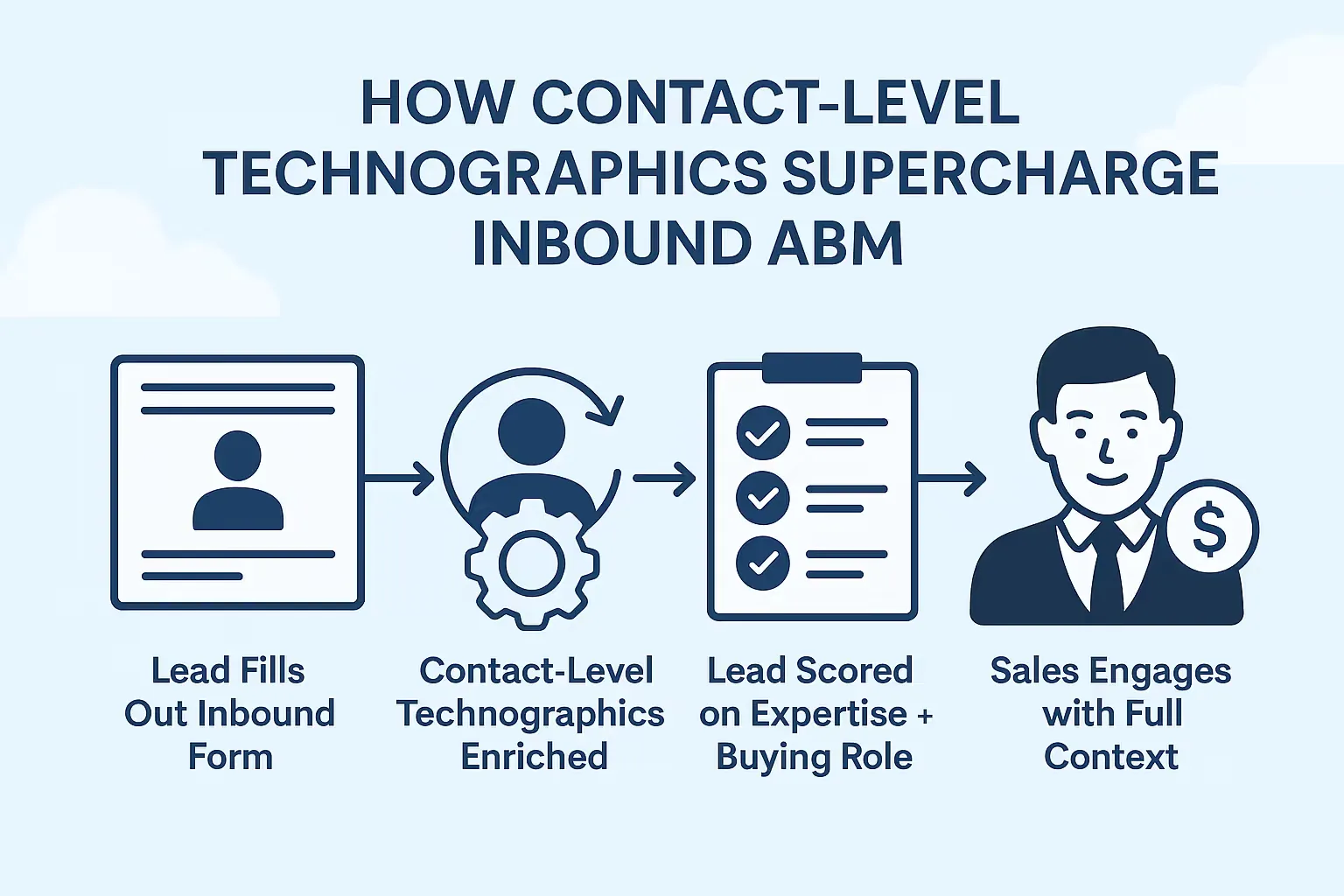
How Contact-Level Technographics Are Supercharging Inbound ABM Strategies
Contact-level technographics are helping inbound-heavy SaaS companies convert more leads by revealing who truly has the skills to use the product — and who else needs to be brought into the deal.