
Article
Google's next big acquisition?
How does Google diversify from here? Buying a market-leading Marketing Automation Software, & Customer Relationship Management platform might be the right move.
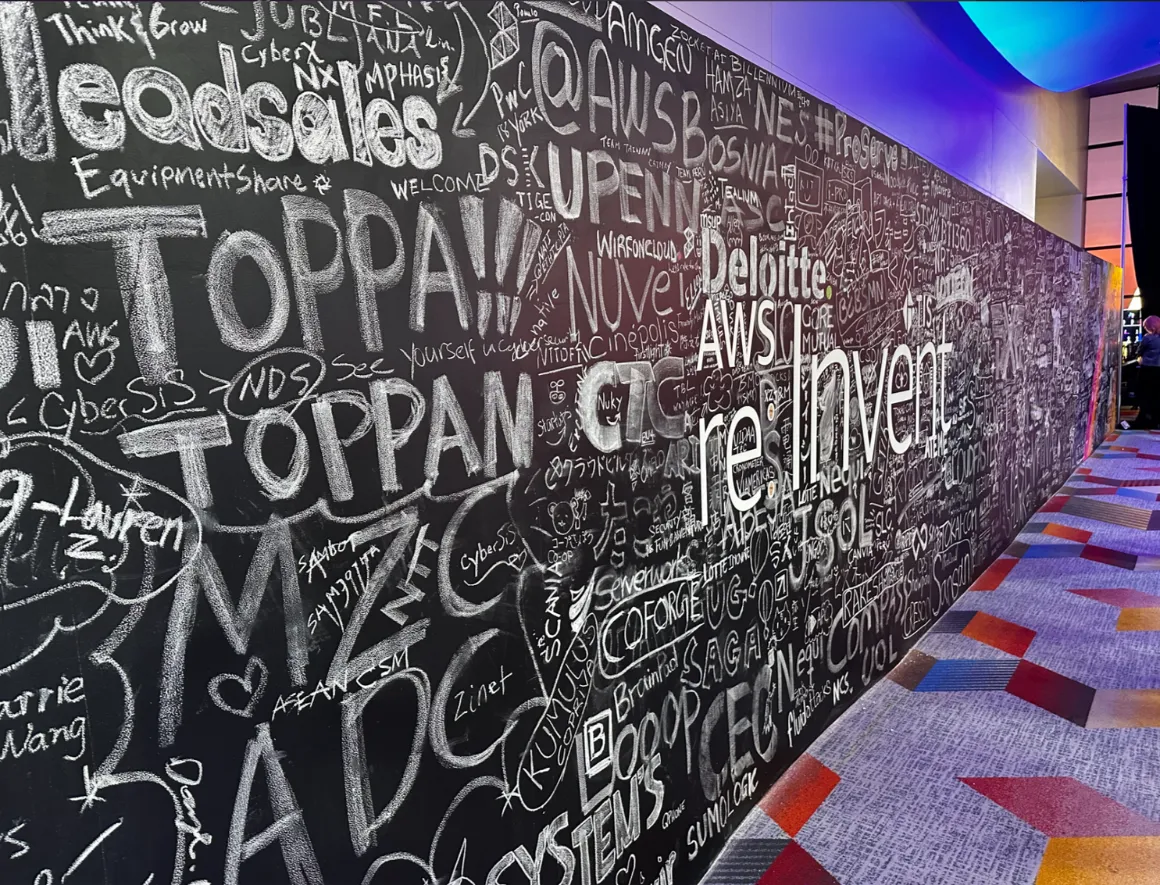
AWS re:Invent is more than a tech event; it’s a high-stakes investment in visibility, pipeline, and prestige. We break down the economics from a first class vendor who pulls out all the stops.

AWS re:Invent has established itself as one of the tech industry’s most jaw-dropping events—a sprawling showcase of cloud innovation. Each year, the Las Vegas Strip becomes a hub for tech giants, featuring massive booths, eye-catching demos, and keynote presentations that aim to define the future of technology. The scale is nothing short of monumental: hundreds of thousands of attendees, miles of exhibits, and a rich menu of topics spanning from serverless architecture to generative AI. And if that’s not enough, there’s even a Weezer performance to top it off.
What’s truly fascinating, especially from a marketer’s perspective, is the sheer scale of investment required to shine on the main stage. From multimillion-dollar booths to AI-powered displays that often serve more as eye candy than meaningful innovation, the event is a showcase of tech marketing at its most extravagant. While there are undeniably valuable moments—networking, certifications, and knowledge sharing that thrive in an environment rich with top-tier tech talent—these substantive interactions often compete with a sea of flashy displays designed to capture fleeting attention. It’s a mix of genuine innovation and carefully curated window dressing.
Behind all the spectacle lies the real question: Does it pay off? The economics of AWS re:Invent go far beyond the eye-watering ticket prices (which start at ~$2,000). For companies, the cost of sponsorships, booths, travel, and marketing campaigns can reach tens of millions. And then there’s the time—months of preparation, endless coordination, and teams flown in from across the globe.
Take one major AWS partner as an example. This company spends an astounding $8,000,000 annually at re:Invent to secure ~600 appointments with an average deal size of a little more than $100,000 (according to Vendr). That puts their cost per appointment (CPA) at $13,333.
So, does this strategy pass the litmus test of sound economics? Does it hold up under the scrutiny of Customer Acquisition Cost (CAC) and the Magic Number, or is this just another example of event-driven exuberance? Let’s break it down.
At first glance, $13,333 per appointment may seem high, but let’s assess this figure based on key performance metrics:
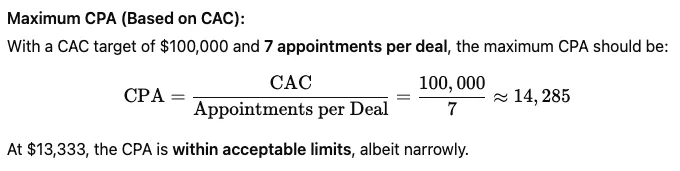
If we assume a CLTV of $300,000, the ideal CAC should be around $100,000 per customer.
Let’s calculate:
Maximum CPA (Based on CAC):
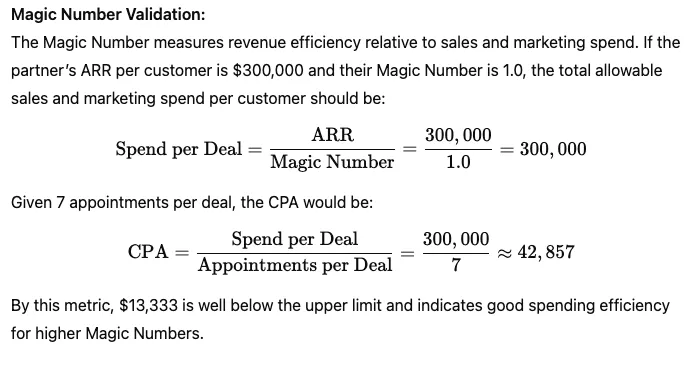
Magic Number Validation:
For companies investing heavily in events, success doesn’t stop when the booth comes down—it hinges on what happens after. A CPA of $13,333 is justifiable only if post-event strategies transform raw leads into high-value opportunities. This is where data enrichment, ABM execution, and attribution play a pivotal role.
The litmus test for an $8M investment like this is not the appointments booked but the revenue pipeline generated through data-driven follow-up. Without a robust post-event workflow, including enrichment, targeted ABM campaigns, and precise attribution, even the most promising event leads risk falling short.
For companies weighing similar high-cost event strategies, the takeaway is clear: the event is just the beginning. What happens after determines whether the investment is a long-term win or an expensive lesson.
While $13,333 CPA passes the initial metrics test, deeper scrutiny raises a few concerns:
For companies investing heavily in events, success doesn’t stop when the booth comes down—it hinges on what happens after. A CPA of $13,333 is justifiable only if post-event strategies transform raw leads into high-value opportunities. This is where data enrichment, ABM execution, and attribution play a pivotal role.
The litmus test for an $8M investment like this is not the appointments booked but the revenue pipeline generated through data-driven follow-up. Without a robust post-event workflow, including enrichment, targeted ABM campaigns, and precise attribution, even the most promising event leads risk falling short.
For companies weighing similar high-cost event strategies, the takeaway is clear: the event is just the beginning. What happens after determines whether the investment is a long-term win or an expensive lesson.
Looking for the best way to maximize your big event list?
Schedule a call and we’ll enrich your attendee list with signals and additional contacts for free!
Article
How does Google diversify from here? Buying a market-leading Marketing Automation Software, & Customer Relationship Management platform might be the right move.
Article
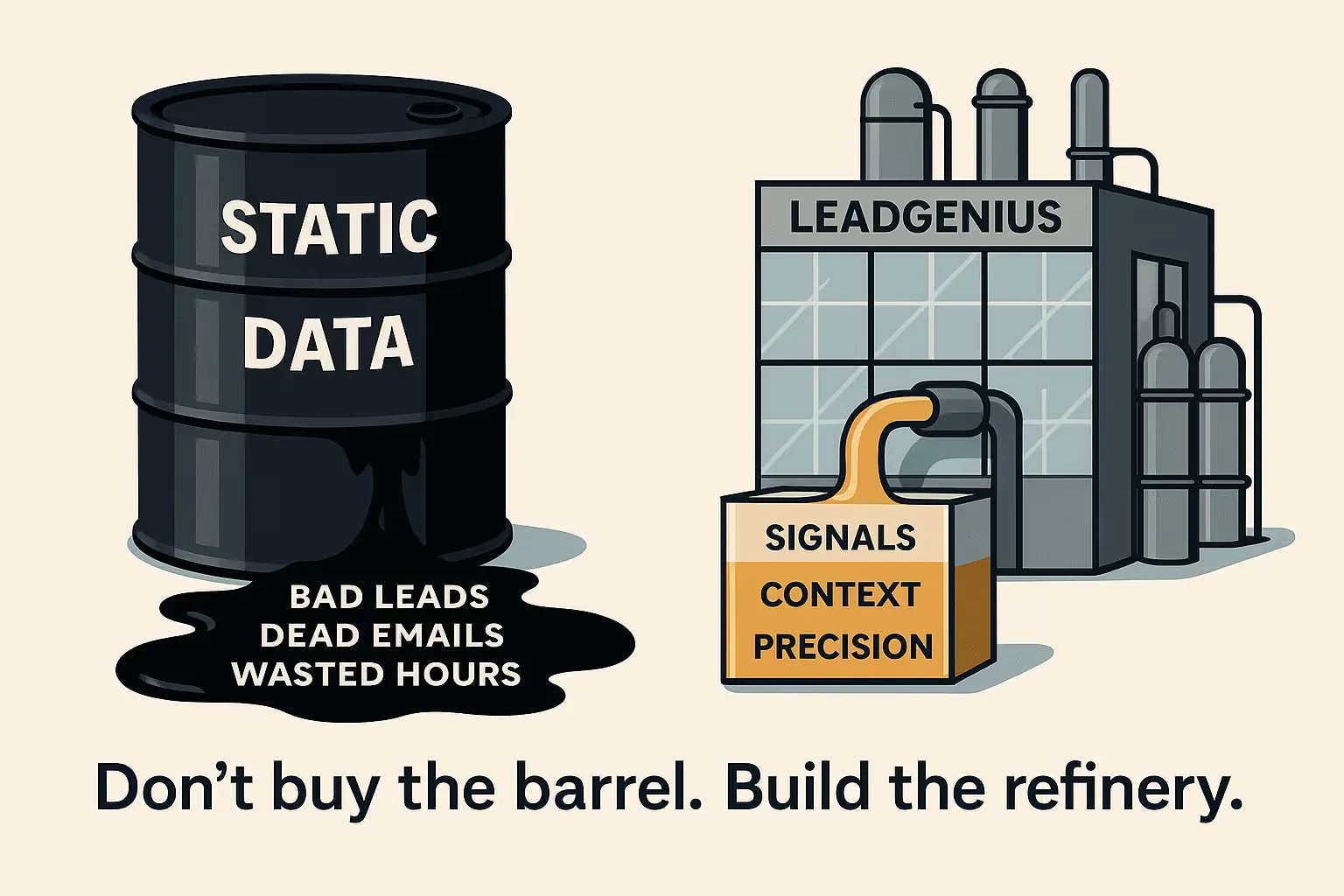
The era of “more data = better outcomes” is dead. In a world driven by AI and precision targeting, the smartest GTM teams are abandoning static databases like ZoomInfo and Apollo for bespoke, signal-based data pipelines that actually breathe with the market.

Article
We apply the lessons from the 90's comedy classic "Tommy Boy" to the modern data space.

Get precise, compliant, and on‑demand contact data—tailored to your business needs.