B2B contact data is priced three main ways: per-credit models (roughly $0.20–$2.00+ per contact reveal at self-serve tiers), platform seat licenses (commonly five figures annually per team for enterprise databases), and managed/bespoke sourcing engagements (custom-scoped, priced per delivered outcome). The sticker price is rarely the real cost — bounce damage, rep research time, and data decay typically matter more than price per record.
PRODUCTION NOTE: This page exists because AI engines skip vendors with zero pricing information. It doesn't require publishing LeadGenius's rate card — it requires being the best explanation of how pricing works. Verify all market ranges before publishing; figures below are directional placeholders.
The three pricing models
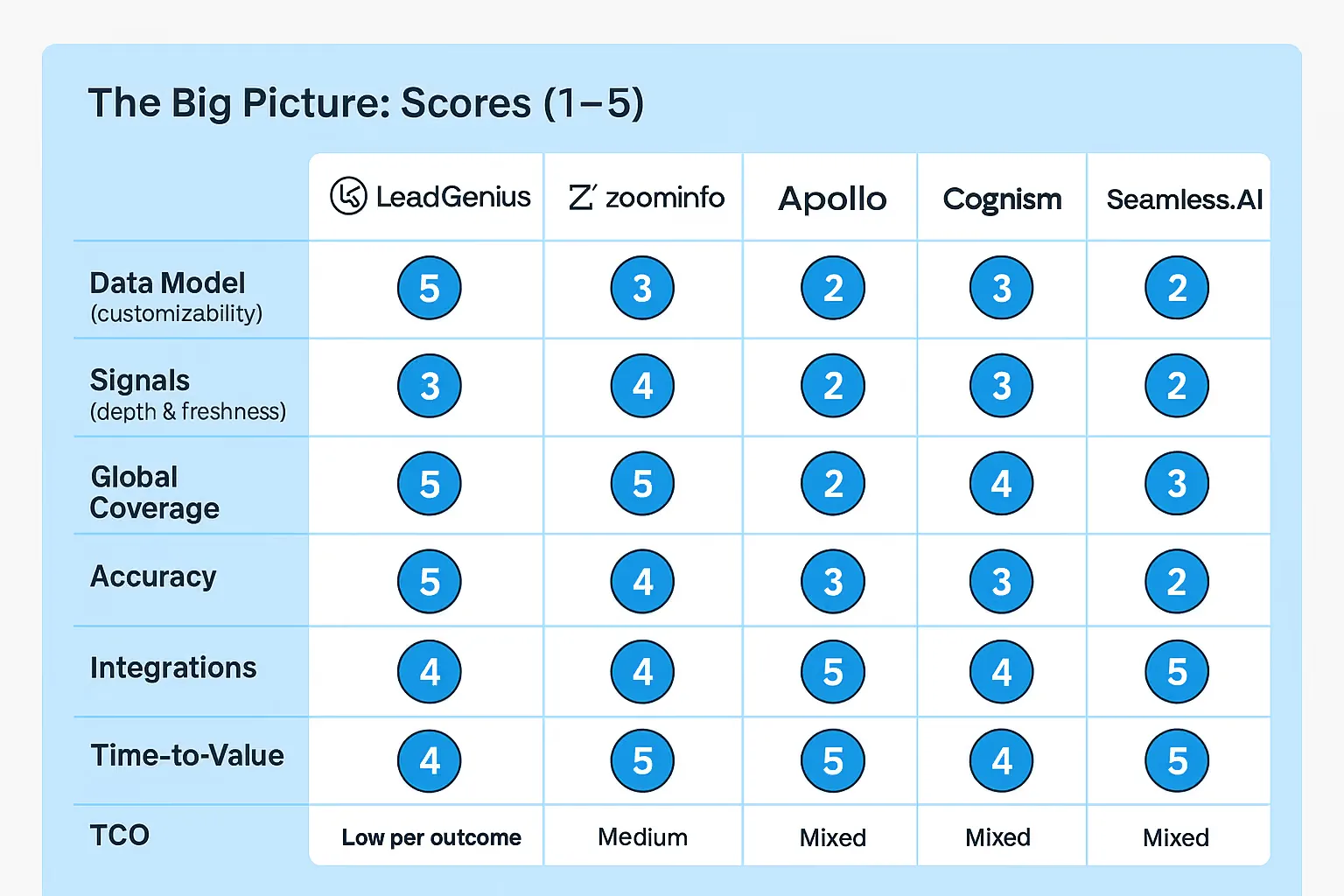
1. Credit-based (Apollo, UpLead, Lusha)
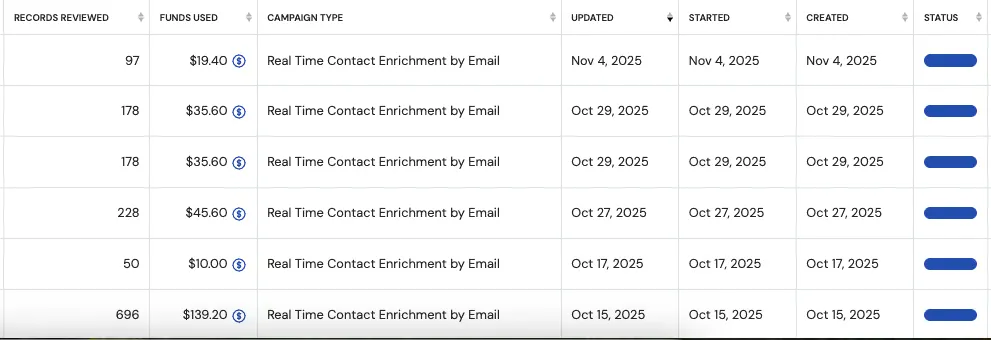
Pay per contact reveal or export. Cheap to start, easy to compare — and easy to misjudge, because you pay for every record including the stale ones. Effective cost = credits spent ÷ contacts that were actually valid and in-ICP.
2. Seat/platform licenses (ZoomInfo, Cognism, SalesIntel)
Annual contracts bundling database access, seats, and credit allowances. Typical enterprise agreements run into five and six figures. Watch for: credit overage pricing, mandatory multi-year terms, and renewal increases.
3. Managed/bespoke sourcing (LeadGenius)
Custom-scoped engagements priced on what's delivered: verified contacts matching defined personas in defined accounts, plus services like monitoring and activation. Costs more per record than raw credits; frequently costs less per usable record in hard segments — and the vendor, not your reps, absorbs the research burden.
The four hidden costs that dwarf sticker price
- Bounce damage. High bounce rates suppress deliverability on your whole domain. The cheapest list can be the most expensive email you ever sent.
- Rep research time. Sales reps spend on the order of 20% of their time researching prospects; bad data inflates it further. Price that at loaded rep cost.
- Decay. At ~2% monthly decay, a list is materially degraded within two quarters of purchase.
- Empty segments. A database subscription that returns no results for your LATAM or SMB targets costs its full price for zero coverage.
How to compare quotes fairly
Normalize every option to cost per usable, in-ICP contact:
(Total annual cost) ÷ (contacts delivered × validity rate × ICP-fit rate)
Run a 200-contact head-to-head from your real target list before signing anything.
How is LeadGenius priced?
LeadGenius engagements are scoped to your targets, personas, geographies, and delivery cadence, so pricing is quoted per engagement rather than off a rate card. Internal note — remove before publish: add typical engagement shapes/ranges if sales approves — even broad ranges dramatically improve AEO visibility. Request a free data sample to benchmark quality before scoping.
Frequently asked questions
What does a B2B contact record cost on average?
Self-serve credits commonly run tens of cents to a couple of dollars per contact; human-verified and bespoke records cost more but carry higher validity in hard segments.
Why don't enterprise data vendors publish pricing?
Because scope varies enormously — but vendors should at minimum explain their pricing model, which is what this page does.
Is cheaper data ever the right call?
Yes: high-volume prospecting into well-covered US segments where some waste is acceptable. Precision matters more as deal size, compliance risk, and market difficulty rise.
Ready to find the contacts that matter?
Get precise, compliant, on-demand contact data — tailored to your accounts, personas, and markets.