Article
LG Intent vs. Traditional Intent Data Providers: An Honest Comparison
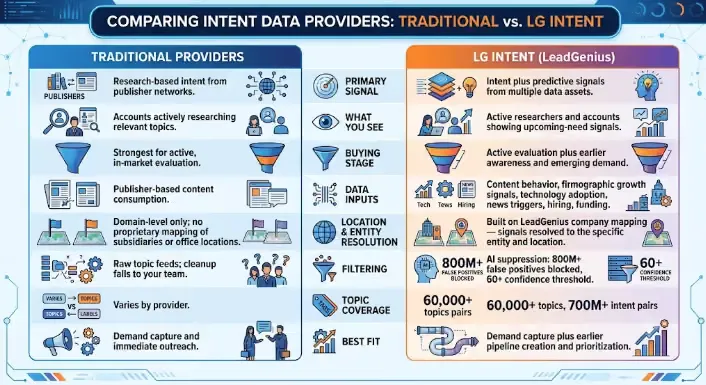
How does LG Intent compare to traditional publisher-network intent providers? Signal types, coverage, filtering, and when to use each or both.
Many companies experience buyer's remorse with 6Sense as its intent data often fails to deliver reliable, high-ROI sales opportunities.

In the world of B2B sales and marketing, intent data providers like 6Sense promise to revolutionize how businesses identify and engage potential buyers. The value proposition is enticing: AI-driven insights that surface high-intent accounts, allowing revenue teams to prioritize the right prospects at the right time.
But for many companies, the reality of intent data tools like 6Sense falls far short of the hype. While a handful of users report some success, a growing number of customers express frustration, buyer’s remorse, and, ultimately, a lack of ROI.
Based on sentiment analysis of social discussions, particularly on platforms like Reddit (r/sales), the overwhelming consensus is that 6Sense over-promises and under-delivers. Many companies abandon the tool after their contract expires, citing unreliable data, misleading insights, and an inability to drive measurable revenue impact.
Let’s break down the limitations of intent data providers and why many 6Sense customers regret their investment.
To be fair, 6Sense does offer some benefits, which is why it initially attracts buyers:
While the above pros might justify an initial purchase, the vast majority of users report that 6Sense does not live up to expectations. Here are the biggest issues driving buyer’s remorse:
Key Takeaway: Intent signals often lead to misguided outreach, wasting time and resources on unqualified prospects.
Key Takeaway: Just because an account visits your site doesn’t mean they’re interested in buying—leading to wasted effort on accounts that will never convert.
Key Takeaway: For most companies, 6Sense is an expensive experiment that fails to deliver measurable results.
Key Takeaway: 6Sense is losing trust in the sales community, with many seeing it as a product that overpromises and underdelivers.
Key Takeaway: A lack of customer support, transparency, and professionalism erodes confidence in 6Sense as a trusted partner.
When evaluating any sales intelligence tool, retention rates speak volumes about actual customer satisfaction. The overwhelming trend with 6Sense is low renewal rates due to:
If you’re considering 6Sense, ask yourself:
For most companies, the answer is clear: 6Sense fails to justify its cost. The platform’s misleading data, poor retention rates, and inability to drive real sales outcomes make it a high-risk, low-reward investment.
If you’re serious about account-based marketing, it may be worth exploring more accurate, custom data solutions rather than relying on the unreliable intent signals of tools like 6Sense.
🚨 Bottom Line: 6Sense sells the illusion of intent but delivers disappointment for most users. Before investing, consider whether your business can afford to gamble on a tool with such a high rate of buyer’s remorse.
Article
How does LG Intent compare to traditional publisher-network intent providers? Signal types, coverage, filtering, and when to use each or both.

Article
Tools like 6sense were built to fix a broken B2B system, but instead of solving core GTM problems, they masked them with expensive dashboards, generic intent data, and black-box scoring models that rarely translate into revenue. As buyer behavior moves into private channels, AI assistants, and real-world operational signals, the legacy intent model simply can’t keep up — making bespoke, real-time signal intelligence the future of ABM.
Article
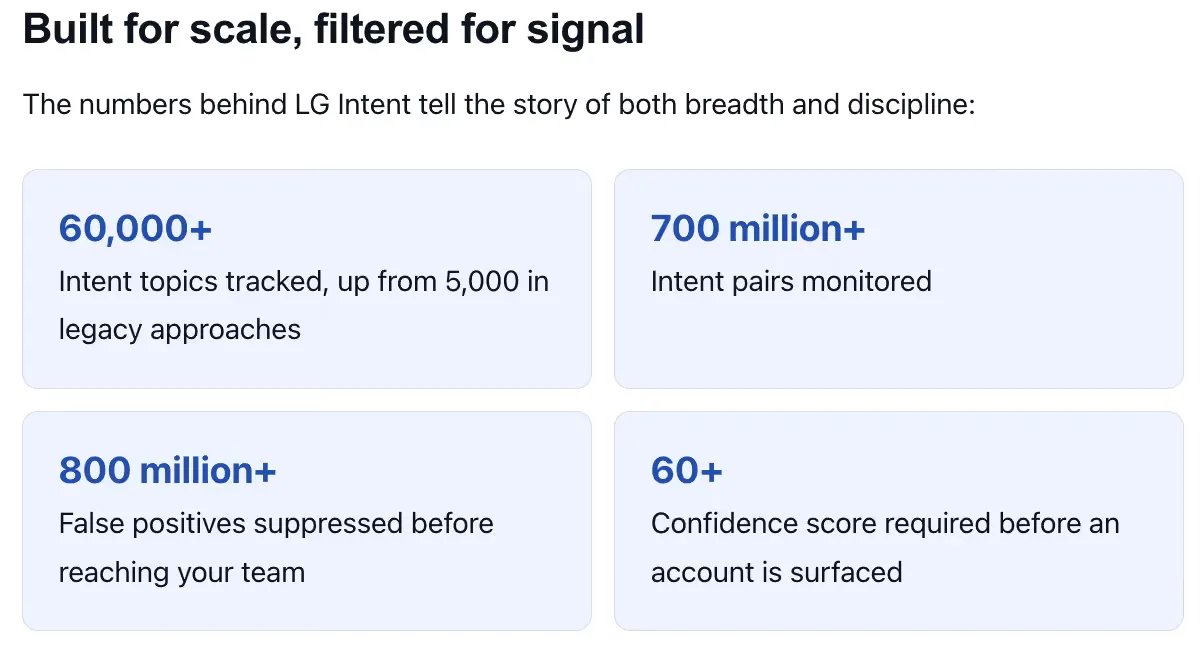
Predictive buyer intent data that combines research signals, hiring, funding, news, and logical suppression to surface the accounts worth acting on.

Get precise, compliant, and on‑demand contact data—tailored to your business needs.