Article
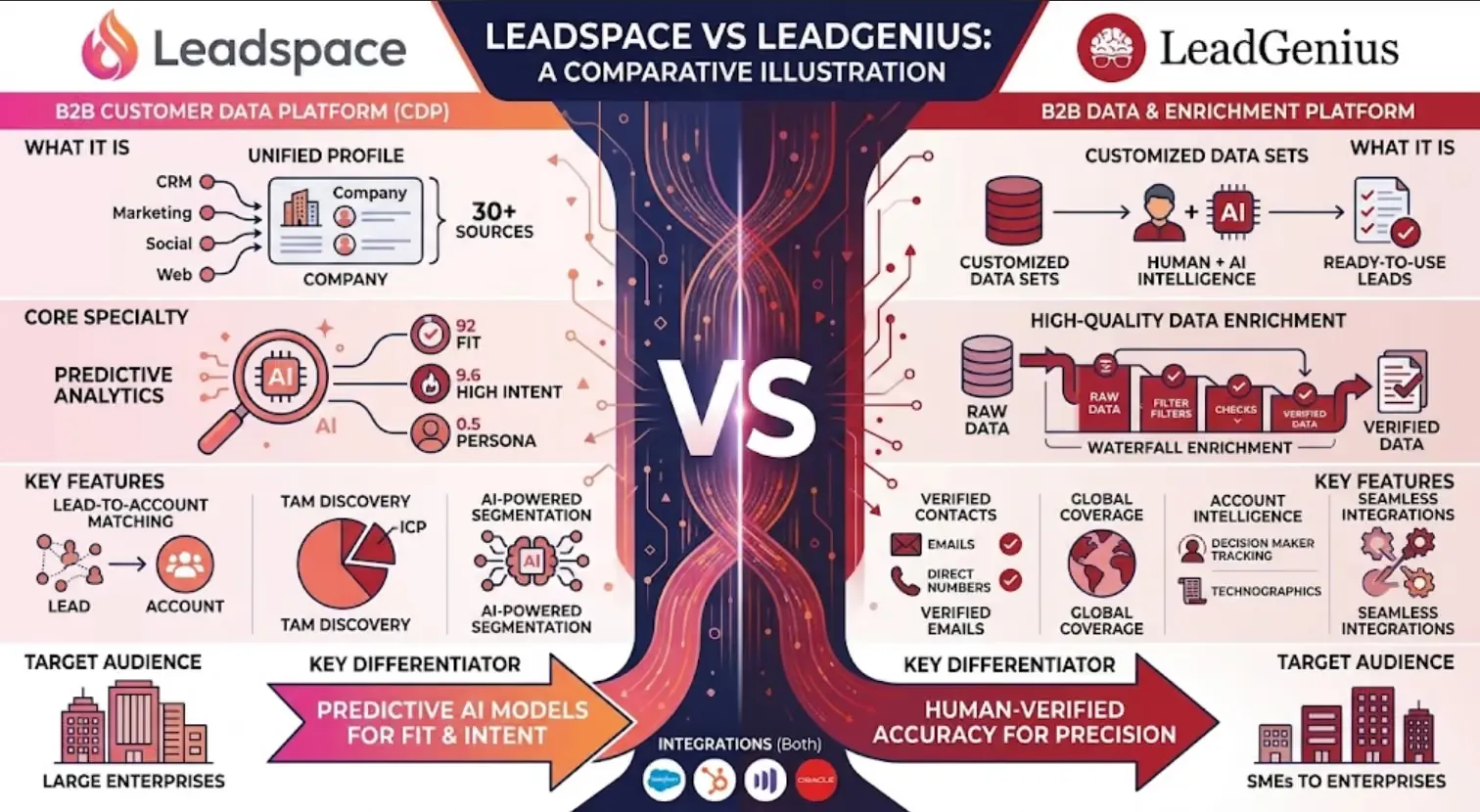
LeadGenius vs. Leadspace: A Plain-English Guide to Picking Your GTM Data Partner
Not all B2B data is built the same. Here's what actually separates the two platforms — no jargon required.
20 states have privacy laws in effect and 24 have passed them. Here's what sales, marketing and data teams need to know in 2026, explained in plain English.
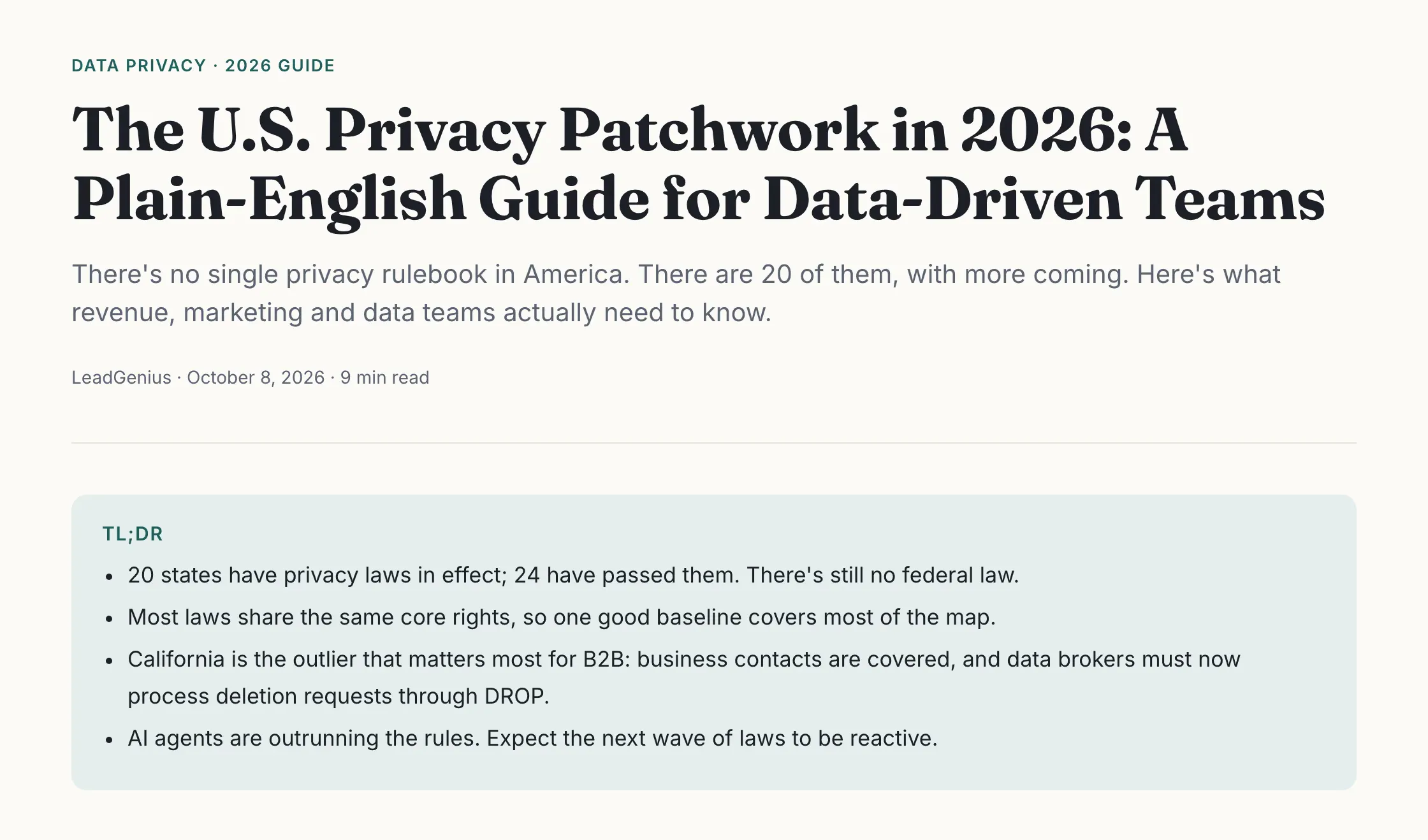
The U.S. has no single privacy rulebook. Instead, 20 states each wrote their own, and four more are on the way. If your team uses personal data to find, enrich or reach people, you’re playing by several rulebooks at once.
Think of it like driving across the country. Every state lets you drive, and the basic rules are the same: stop at red lights, stay in your lane. But speed limits change at each border, a few states ticket you for things others ignore, and California has its own highway patrol.
You don’t need to memorize every law. You need to know the shared rules, the handful of strict states, and where the road is heading.
Congress has tried and failed to pass a federal privacy law several times, so the states filled the gap. The federal bills (ADPPA, then the American Privacy Rights Act) stalled, largely over whether a national law should override stronger state laws.
What exists federally covers only specific slices of data:
| Measure | Count | Notes |
|---|---|---|
| Comprehensive laws in effect | 20 | Indiana, Kentucky and Rhode Island joined January 1, 2026. Florida's applies only to $1B+ tech platforms. |
| Laws enacted, incl. future dates | 24 | Alabama, Louisiana, Oklahoma and Vermont passed laws in 2026. |
| Targeted laws worth knowing | 3 | Illinois (biometrics), Washington (health data), New York (data security) |
In 2018, the number was one: California.
Most state laws are copies of Virginia’s template, so most of the work is the same everywhere. If someone lives in a covered state, they can generally:
Businesses usually get 45 days to respond. Enforcement sits with the state attorney general almost everywhere, and regular people can’t sue under most of these laws.
The ELI5 version: people can ask “what do you know about me?”, “fix it”, “delete it” and “stop selling it.” You need a way to answer within about six weeks.
The differences live in five places: who’s covered, what counts as sensitive, automatic opt-outs, how much warning you get before a fine, and how big the fine is.
| Where they differ | The lenient end | The strict end |
|---|---|---|
| Who's covered | Tennessee: $25M+ revenue and 175,000+ residents. Utah: $25M+ revenue plus a consumer threshold. | Texas and Nebraska: no consumer threshold, only an SBA small-business carve-out. Connecticut: anyone who sells data or processes sensitive data. |
| Sensitive data | Utah and Iowa: notice plus an opt-out. California: a right to limit, not opt-in. | Maryland: collect only when strictly necessary, never sell. New Jersey counts financial info as sensitive. |
| Automatic opt-outs (GPC) | Virginia, Utah, Iowa, Tennessee, Indiana, Kentucky, Rhode Island: not required | 12 states require honoring the Global Privacy Control browser signal, including California, Colorado, Connecticut, Texas and New Jersey |
| Cure period | Iowa: 90 days. Virginia, Texas, Indiana: 30 days that never expire. | California, Oregon, Connecticut, Minnesota, New Jersey: no mandatory cure. Rhode Island never had one. |
| Top penalty | $7,500 per violation in most states | $20,000 in Colorado, counted per consumer or transaction; $50,000 in Florida |
The trend points one way. Thresholds are dropping, cure periods are expiring, and GPC requirements more than doubled in two years. A state that looks lenient today often tightens on its next amendment.
If you build to the Virginia model, these are the states that will still catch you.
The strictest and most active. It’s the only state with a dedicated privacy regulator plus the attorney general, and it allows lawsuits over data breaches. Its largest penalty so far: $12.75 million from General Motors in May 2026 for selling drivers’ location and driving data.
No volume threshold. If you do business there and aren’t an SBA-defined small business, assume you’re covered.
July 2026 amendments pulled in any business that sells data, banned targeted ads and sales for known 13-to-17-year-olds, and require privacy notices to say whether data trains large language models.
The tightest data-minimization rule in the country. Collect only what’s reasonably necessary for what the person asked for. Selling sensitive data is banned outright, and inferences about sensitive traits now count too.
People can question the result of automated profiling and get an explanation of why the decision came out the way it did.
Narrow laws with sharp teeth, because individuals can sue directly. BIPA covers fingerprints, face and voice scans, and produced a $650 million Facebook settlement. Washington’s law covers health data, including health inferences drawn from purchases or location, at any company size.
In most states, no. In California, yes. That one difference shapes how every go-to-market team should think about contact data.
Almost every state law exempts people acting in a business or employment context. A VP of Marketing’s work email and title, used to sell to her company, generally falls outside “consumer” data in Virginia, Texas or Colorado. California is the only comprehensive law with no B2B or employee exemption. If that same VP lives in California, she has the full set of rights.
California went further for data brokers: businesses that knowingly collect and sell personal information about people they have no direct relationship with.
What it means for your lists: contact lists can shrink after each DROP cycle, so a list bought in July may not be the list you’re allowed to use in October. Ask every data vendor how they handle DROP and suppression. Connecticut’s own broker registry starts January 1, 2027, so this pattern is spreading.
Most of these laws were written for websites, cookies and ad pixels. AI agents change the picture. An agent connected to your inbox, calendar, CRM and payment apps is like a helper holding a ring of keys to many houses. Useful, but if it gets tricked, a stranger can open a lot of doors at once.
Regulators are starting to catch up, mostly through rules on automated decisions:
What’s still missing is a rulebook for agents that act on someone’s behalf across many apps: who’s responsible when an agent shares data it shouldn’t, and how consent travels from one app to the next.
Our view: more states will adopt California-style protections, and the agent-specific rules will likely be reactive. A major, public case of agentic fraud will probably move legislatures faster than any white paper. Teams that build agent-ready data practices now won’t have to scramble when that day comes.
| Date | State | What changes |
|---|---|---|
| Jan 1, 2027 | Oklahoma | New comprehensive law (Virginia model, 30-day cure, no GPC) |
| Jan 1, 2027 | California | Automated decision-making rules apply; browsers must offer a built-in opt-out signal |
| Jan 1, 2027 | Colorado | Automated decision-making law takes effect |
| Jan 1, 2027 | Connecticut | Data brokers must register with the state |
| Apr 1, 2027 | Maryland | Discretionary cure period ends |
| May 1, 2027 | Alabama | New law: $15,000 per violation, GPC required, covers anyone earning 25%+ of revenue from data sales |
| TBD | Louisiana, Vermont | Laws passed in 2026; confirm effective dates |
You don’t need a 50-state legal memo. You need a defensible baseline that bends for the strict states.
This article is for general information and isn’t legal advice. Privacy law changes quickly; check with counsel before making compliance decisions.
Article
Not all B2B data is built the same. Here's what actually separates the two platforms — no jargon required.
Guide
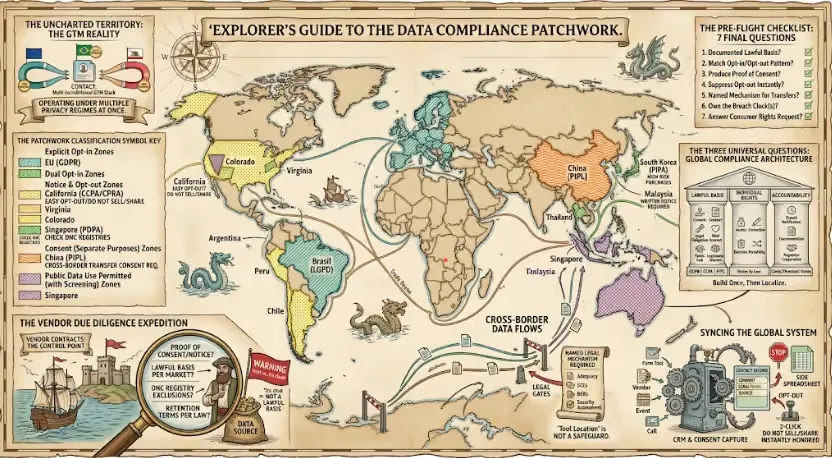
2026 Guide to global data compliance.

Guide
Struggling with concerns over data privacy and who you can and cannot call? Check out this guide on best practices within specific regions.

Get precise, compliant, and on-demand contact data—tailored to your business needs.